
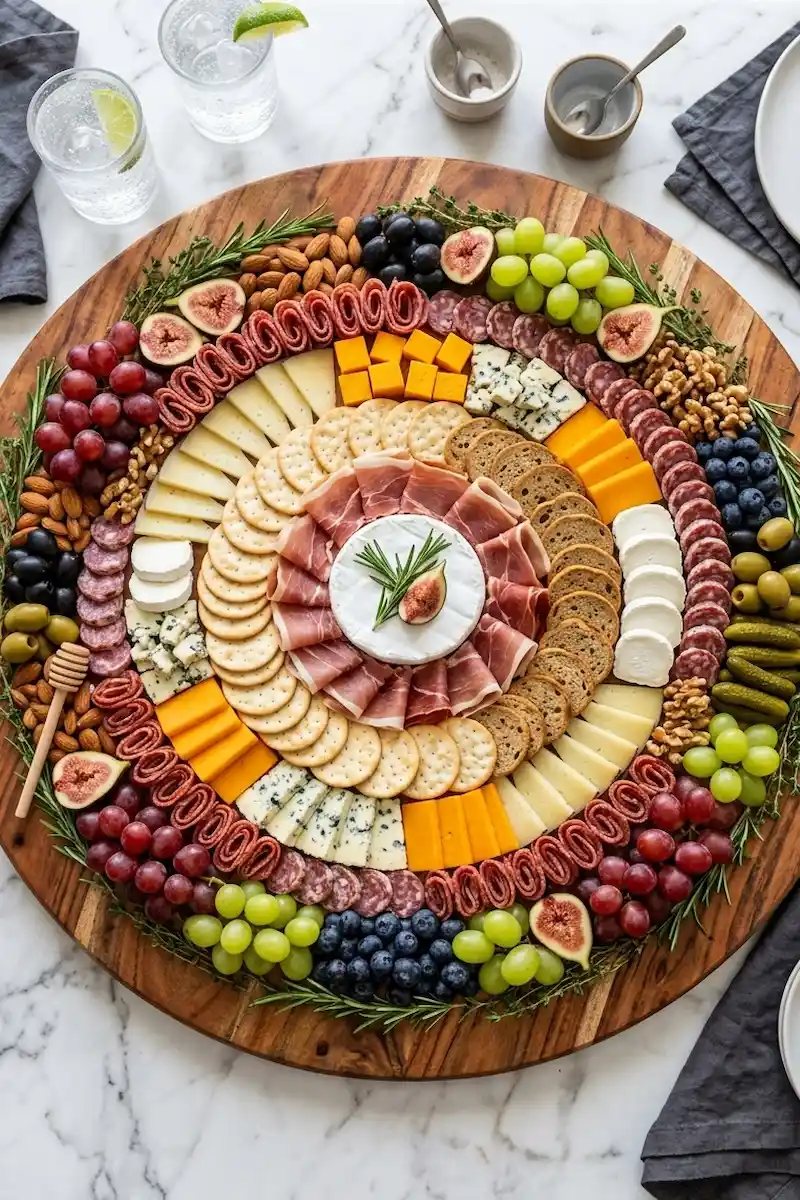
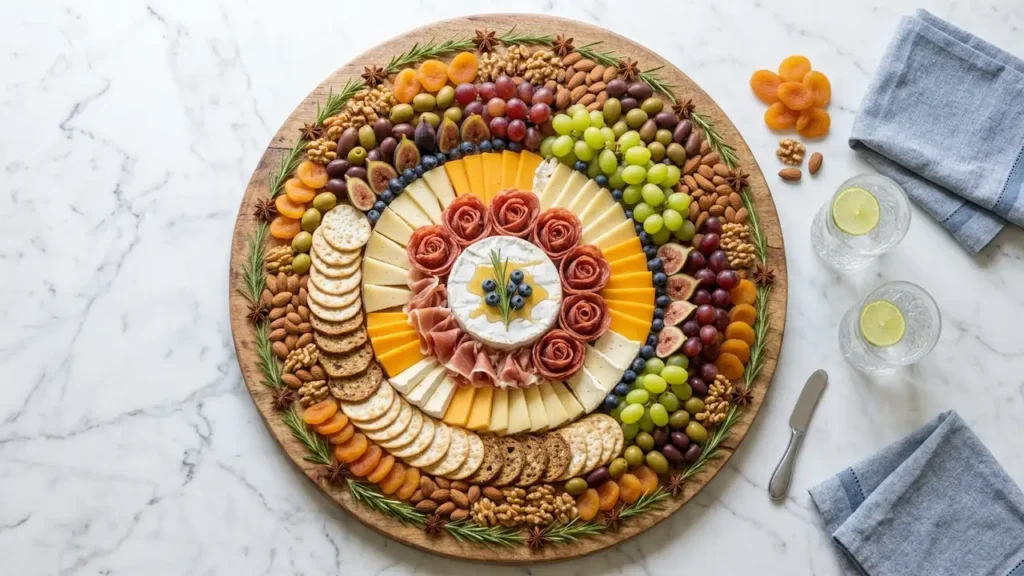
A charcuterie mandala is one of those party food formats where the presentation itself becomes the event. Unlike a traditional rectangular charcuterie board where guests simply graze from whatever is closest to them, a circular mandala arrangement draws every person at the table into the visual experience first, the symmetry, the color progression, and the concentric rings of meat and cheese and fruit that radiate outward from a central focal point before anyone has picked up a cracker.
The trend took hold on social media because it photographs beautifully from above, producing the kind of overhead flat-lay content that performs exceptionally well on Pinterest and Instagram. But the appeal at the table is just as strong: a well-executed charcuterie mandala is a genuine conversation piece that makes even a casual gathering feel considered and special.
This guide covers everything you need to build your first one, from ingredient selection and tool choice through the five-step construction process, themed variations for different occasions, and the symmetry and color balance techniques that separate a visually striking mandala from a merely circular arrangement of food.
For more ideas on visually striking party food formats that create a centerpiece moment, see our guide on what cakes are in trend for the dessert equivalent of this approach.
Table of Contents
What Is a Charcuterie Mandala?
A charcuterie mandala is a circular arrangement of cured meats, cheeses, fruits, nuts, crackers, and garnishes built in concentric rings or radial patterns on a round board or platter. The word “mandala,” borrowed from the Sanskrit term for “circle” or “sacred diagram,” describes the intentional, symmetrical structure of the arrangement: each ring radiates outward from a central focal point, and each element within a ring mirrors the elements at the same position on the opposite side of the board.
This is what distinguishes a charcuterie mandala from a standard charcuterie board. A traditional board is assembled with visual interest and variety in mind, but it does not require or imply symmetry. A mandala is built on the principle that every element has a counterpart, that colors are balanced around the central axis, and that the viewer’s eye is drawn inward to the center and then guided outward through the rings in a deliberate sequence.
The format is particularly well suited to dinner parties, celebrations, bridal showers, holiday gatherings, and any occasion where the appetizer or grazing table is meant to be as much of an experience as the food itself. It also scales elegantly: a small charcuterie mandala on a 30cm board feeds four to six people comfortably as an appetizer, while a large board of 50 to 60cm can anchor a full grazing table for twenty or more guests.
Essential Ingredients for Your Charcuterie Mandala
A balanced charcuterie mandala requires variety across five categories: meats, cheeses, crackers and breads, fruits, and garnishes. Within each category, the goal is contrast: in texture, in color, in fat content, and in flavor intensity.
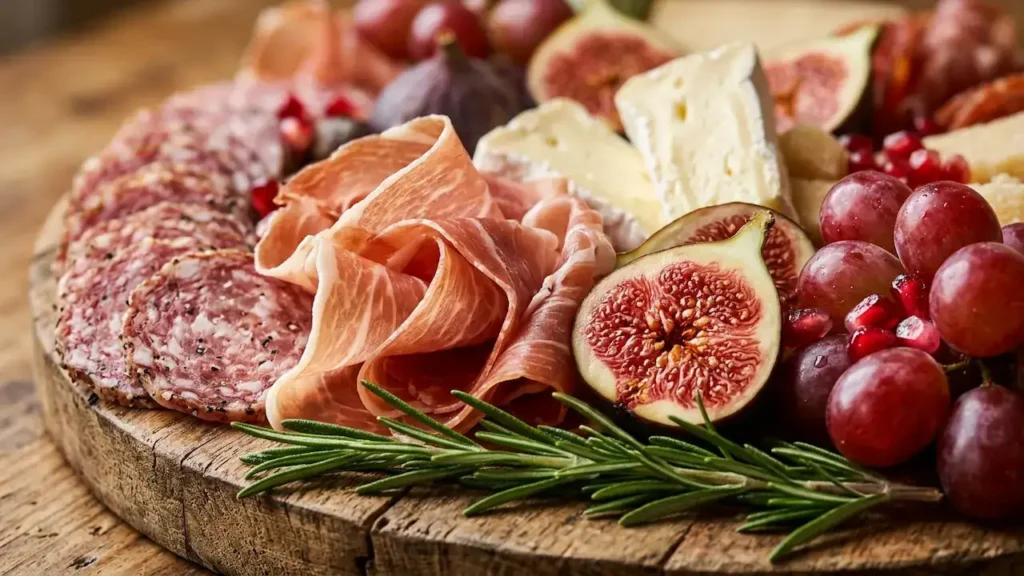
Cured meats. Aim for three to four varieties with meaningfully different appearances. Thinly sliced prosciutto di Parma folded into delicate ribbons, Genoa salami in overlapping circles, sliced chorizo in rustic stacks, and soppressata rolled into cylinders give you four distinct shapes and four distinct color and fat profiles. The variety of folding and rolling techniques you use to present the meats contributes significantly to the visual texture of the mandala.
Cheeses. A well-balanced mandala includes at least three cheese types across the hardness spectrum. A hard aged cheese (aged cheddar, Manchego, or Parmigiano-Reggiano), a semi-firm option (Gouda, Gruyère, or Havarti), and a soft or spreadable option (Brie, Camembert, or whipped cream cheese) give guests textural variety and give you visual variety in how each cheese can be presented: cubed, sliced into triangles, left as a whole small wheel, or spooned into a small bowl.
Crackers and breads. Shape variety matters here as much as flavor variety. Long, thin breadsticks or grissini create linear elements that contrast beautifully with the circular rings. Round crackers reinforce the mandala’s geometry. Irregular artisanal crackers with seeds or herbs add visual texture. Sliced baguette or crostini provides a more substantial base for soft cheeses.
Fruits. This is where color contrast is most effectively created. Fresh red or black grapes in small clusters, sliced fresh figs (their cut faces revealing the jewel-like interior), fresh or dried strawberries, blueberries, and pomegranate seeds all contribute vivid color punctuation within the rings. Dried apricots, dates, and cranberries provide a different visual texture and a concentrated sweetness that balances the saltiness of the meats and cheeses.
Nuts and garnishes. Whole Marcona almonds, candied walnuts, roasted cashews, and pistachios (their green shells adding a distinctive color note) fill gaps in the ring structure and provide crunch contrast. Olives in two or three varieties add brine and color. Fresh herb sprigs, particularly rosemary and thyme, are some of the most effective garnishes in mandala building: a sprig of rosemary angled between two sections creates an immediate visual boundary that reads as intentional structure rather than a random gap.
Our chocolate-covered pecans make an elegant sweet garnish that bridges the savory and sweet elements of a mandala, which is particularly effective in the outermost ring where a sweet note signals the transition to dessert.
Step-by-Step Guide to Building a Charcuterie Mandala
Step 1: Choose Your Base
The board or platter is as important as the food on it. A charcuterie mandala requires a circular surface, and the size determines the scale of the whole composition. For four to six guests: a 30 to 35cm round wooden board or slate serving platter. For eight to twelve guests: a 45 to 50 cm board. For a full grazing table centerpiece: a 60cm board or a large round pizza stone works well and adds a rustic visual element.
The board should have enough surface area that the rings have room to breathe visually: a mandala that is too compressed looks crowded rather than composed. If your board has a natural grain pattern or color, consider how it will read through the food: a dark slate shows off light cheeses and pale meats beautifully, while a light maple wood makes red fruits and dark olives pop.
Step 2: Create Your Centerpiece
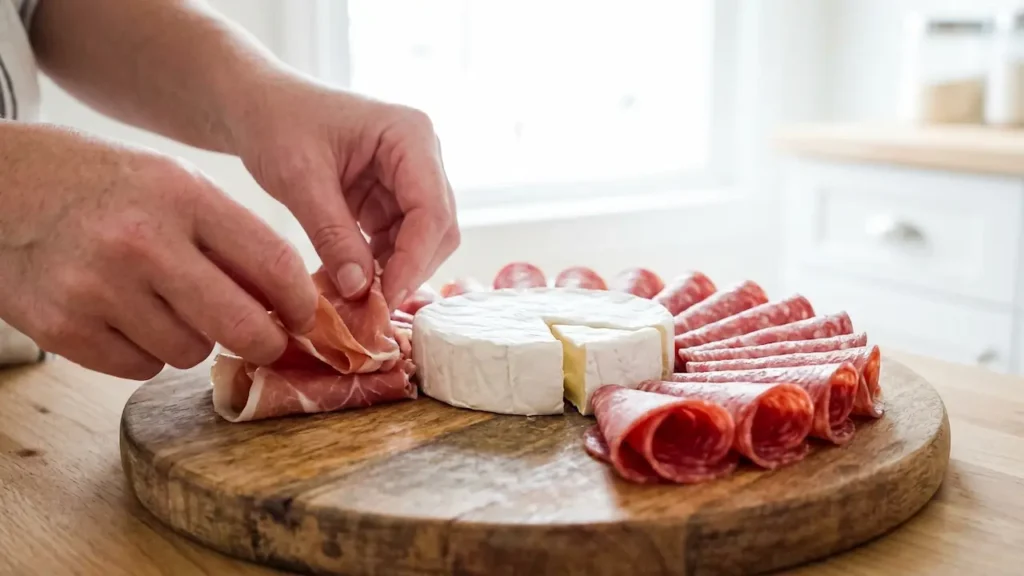
The center of a charcuterie mandala is the visual anchor that everything else radiates from, and it should be something with genuine presence. Options that work particularly well: a small whole wheel of Brie or Camembert (especially effective when scored across the top and baked briefly before assembling the board), a small ceramic bowl of fig jam or honey, a dense cluster of grapes, or a small pile of whole walnuts or Marcona almonds. Place this element exactly in the center of your board before anything else goes on.
Step 3: Build Concentric Rings
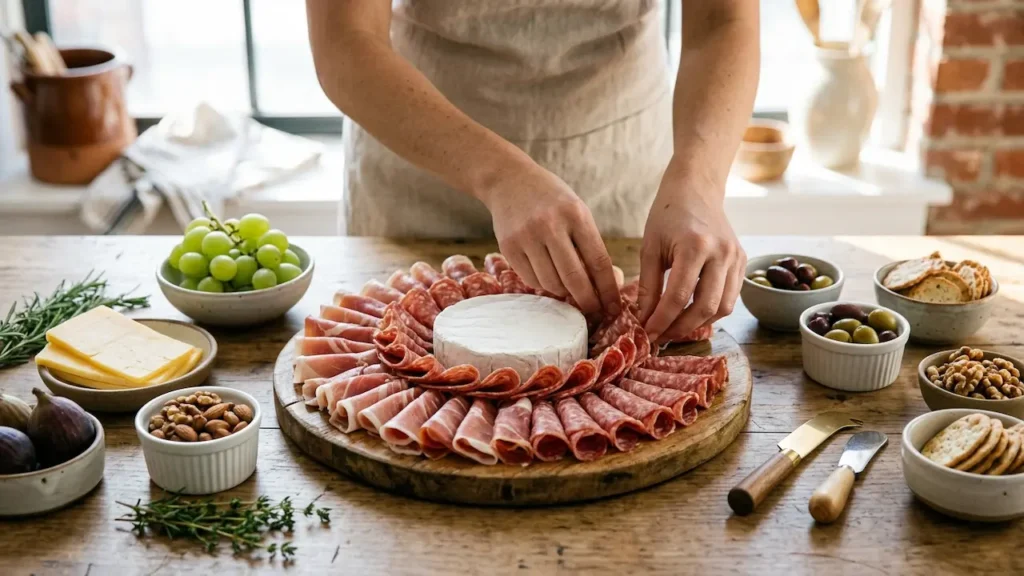
Working outward from the centerpiece, build the mandala in distinct rings. The first ring immediately surrounding the center should be your most premium or visually striking element, often a soft cheese or the most visually interesting meat preparation. Each subsequent ring works outward using a different category of ingredient.
A practical ring sequence for a medium mandala: Ring 1 (surrounding the center) is a ring of thinly folded prosciutto or rolled salami. Ring 2 alternates sliced hard cheese with wedges of semi-firm cheese. Ring 3 is crackers of two different shapes alternating. Ring 4 is fruit, alternating red grapes with fresh fig halves and scattered blueberries. The outermost ring uses nuts, olives, and herb sprigs to frame the entire composition.
Within each ring, maintain even spacing and consistent positioning of each element. The goal is for the ring to read as a continuous band of color and texture rather than a series of isolated items.
Step 4: Fill Gaps with Garnishes
Once the main rings are placed, step back and assess the board from above. Every gap between rings and within rings is an opportunity for a garnish that adds color depth or texture contrast. Scatter pomegranate seeds into any dark gaps between meats and cheeses. Tuck a sprig of fresh thyme between a cheese wedge and a cracker stack. Nestle a few dried cranberries between a cluster of grapes and a row of almonds. These small additions are what make the difference between a good mandala and a great one.
For more inspiration on circular arrangement principles and color balance in food presentation, our dot cake recipe applies similar visual principles of concentric color and even spacing to dessert, and the thinking transfers directly.
Step 5: Add Final Touches
The finishing elements of a charcuterie mandala should be applied last and should be the lightest, most delicate components: fresh herb flowers (thyme or rosemary in bloom if available), edible flowers in seasonal colors, a light drizzle of honey over the soft cheese at the center, a scattering of flaky sea salt over the meats, or a few cracked pink peppercorns scattered sparingly across the surface for color punctuation.
For a visual walkthrough of the process, watch this helpful charcuterie mandala tutorial on Pinterest before you start building your board.
Themed Charcuterie Mandala Ideas
Italian Mandala. Prosciutto di Parma, Genoa salami, and coppa as the meat rings. Fresh mozzarella balls and aged Parmigiano-Reggiano as the cheese rings. Sun-dried tomatoes, Castelvetrano olives, roasted red pepper strips, and fresh basil leaves as garnishes. Serve with grissini and sliced focaccia rather than standard crackers.
Mediterranean Mandala. Sliced halloumi, feta crumbles, and labneh (strained yogurt cheese) as the cheese elements, with small bowls of hummus and tzatziki at the center. Kalamata olives, roasted artichoke hearts, sliced cucumbers, and pita chips fill the outer rings. Dried apricots, fresh pomegranate seeds, and mint leaves complete the color palette.
Holiday Mandala. Work with a red, green, and gold color palette: cranberry red from dried or fresh cranberries; deep green from rosemary, pistachios, and green grapes; and gold from aged cheddar, honey, and yellow pear slices. Seasonal garnishes like small sprigs of pine, star anise pieces, and cinnamon sticks add visual drama without being edible.
Breakfast Mandala. Smoked salmon in ribbon folds, cream cheese (plain and herb-flavored), cucumber rounds, capers, and thinly sliced red onion form the savory rings. Bagel chips replace crackers. Fresh dill, lemon wedges, and blueberries complete the color composition. Components from our roasted strawberry whipped ricotta toast recipe adapt beautifully into a morning grazing board: the whipped ricotta served in a small bowl at the center with roasted strawberries in an inner ring is particularly striking.
For a beverage pairing that complements the elegance of a mandala spread, our matcha affogato provides a visually striking drink option that fits the aesthetic of a considered, beautifully presented table.
Tips for Perfect Symmetry and Color Balance
Work in quarters. Before placing any food, mentally divide your round board into four equal quadrants using imaginary lines. As you build each ring, place the same element in the same relative position in each quadrant before moving on. This creates the rotational symmetry that gives a mandala its characteristic appearance even when you are working with irregular organic shapes like grape clusters and folded meats.
Use the rule of color balance. No single color should appear in more than one section of the same ring without appearing again at the opposite side of the board. If you place red grapes at the 12 o’clock position of the fruit ring, place another cluster at the 6 o’clock position. This creates visual balance without requiring the board to be perfectly identical in every quadrant.
Work with odd numbers. Odd numbers of items within any section of a ring look more natural and intentional than even numbers. Three crackers stacked at an angle, five salami slices overlapping, and seven whole almonds in a small cluster all read as composed rather than mechanical.
Vary the height within rings. A flat mandala that has no variation in height looks two-dimensional in photographs and at the table. Stack crackers at angles. Leave a small wheel of Brie whole rather than slicing it. Roll salami into cylinders that stand upright. These height variations create shadows in overhead photographs and visual interest at eye level.
Trust the process over perfection. The first mandala you build will not look exactly like what you planned, and that is entirely normal. The organic shapes of food mean that genuine geometric precision is both impossible and unnecessary: what you are aiming for is the impression of symmetry rather than mathematical exactness.
The same attention to detail that produces a beautiful mandala applies to baking: our guide on why banana bread collapses explains how precision in temperature and ratios produces consistently beautiful results, the same underlying principle applied to a different format.
Frequently Asked Questions About Charcuterie Mandala
How Far in Advance Can I Make a Charcuterie Mandala?
Ingredients can be prepped up to 24 hours in advance: cheeses sliced and wrapped, meats folded or rolled and stored in a covered container, fruits washed and dried, and nuts and crackers portioned. The assembly itself should happen no more than 2 hours before serving for the best visual appearance and food safety, since cured meats and soft cheeses should not sit at room temperature for longer than 2 hours.
If you need to partially assemble in advance, build the board up to the stage before crackers and fresh fruits are added (since crackers absorb moisture from meats and cheeses and lose their crunch, and fresh fruits release juice). Add crackers and fresh garnishes within 30 minutes of serving.
How Much Food Do I Need for a Charcuterie Mandala?
As an appetizer before a full meal, plan for 60 to 85 grams (2 to 3 oz) of meat and 60 to 85 grams of cheese per person, plus equivalent amounts of crackers and garnishes. If the charcuterie mandala is the primary food offering at a grazing party rather than a starter, double those quantities. It is almost always better to have more than you need: a full, abundant mandala looks significantly more impressive than a sparse one, and the ingredients store well if unused.
Can I Make a Vegetarian Charcuterie Mandala?
Yes, and a vegetarian mandala can be just as visually dramatic as one that includes cured meats. Focus on a wider variety of cheeses (four to five rather than three), include roasted and marinated vegetables in the rings that would otherwise be occupied by meats (roasted red peppers, marinated artichoke hearts, grilled zucchini rounds), and increase the variety and visual prominence of fruits and garnishes. Hummus, baba ganoush, or olive tapenade served in small bowls can fill the centerpiece and inner ring positions that a wheel of Brie might occupy in a standard version.
What Do I Do with Leftovers?
Store cured meats and cheeses in separate airtight containers in the refrigerator for up to 3 days. Discard any crackers that have absorbed moisture from the board, as they will not recover their crunch. Fresh fruits that have been cut or have had their skins broken (figs; grapes that have been separated from the cluster) should be consumed the same day or the next morning. Nuts and dried fruits store well at room temperature for several weeks in a sealed container.
For more celebration and party planning inspiration that complements the charcuterie mandala format, our graduation cakes: the sweetest way to celebrate success covers the dessert planning side of a complete celebration spread.
Related Reading
- Honey Peach Cream Cheese Cupcakes – A dessert that photographs as beautifully as the mandala itself
- Tanghulu Recipe – A visually striking individual-serve sweet element that can anchor the center of a dessert mandala variation.