
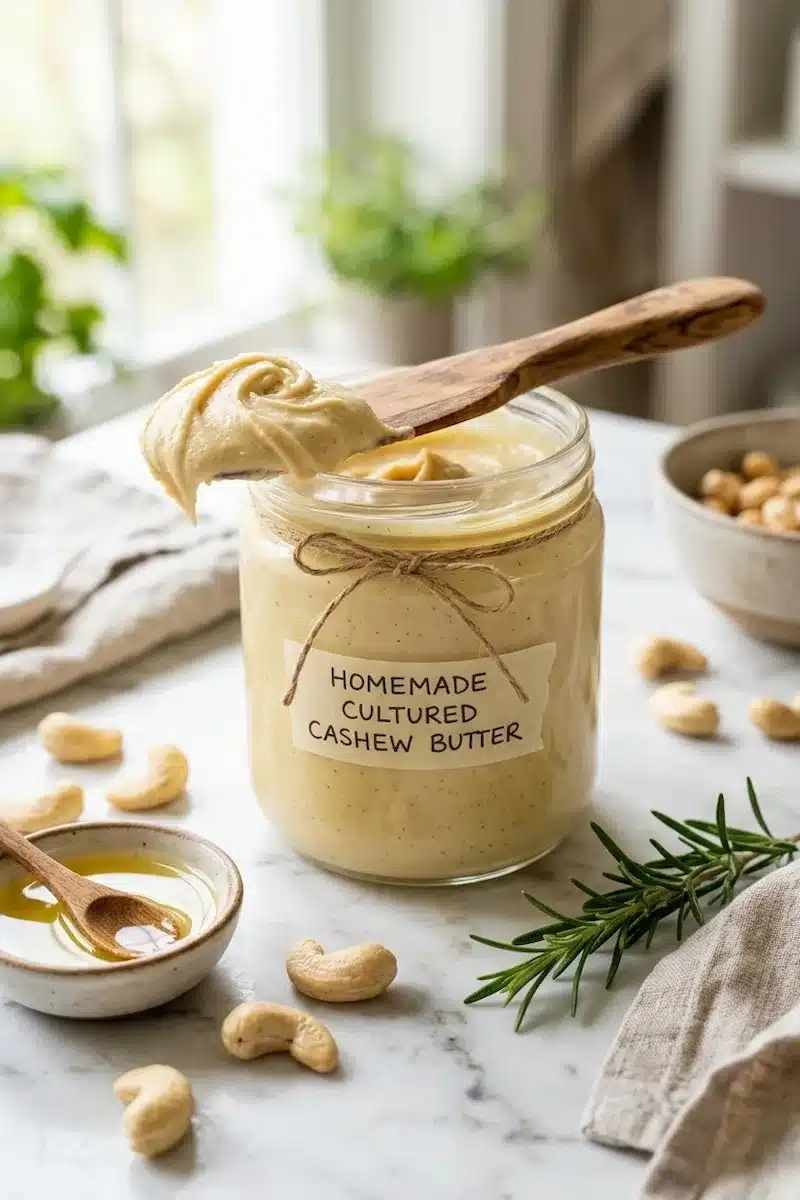
This Miyoko’s vegan butter recipe brings the cult-favorite cultured cashew butter home in four simple steps, at a fraction of the store cost. Miyoko’s Creamery became a phenomenon in the plant-based food world not by making a basic coconut oil spread and calling it butter but by doing something genuinely different: applying the culturing techniques of traditional European butter-making to cashew cream, producing a vegan butter with real tangy depth, a clean finish, and behavior in cooking and baking that closely mirrors dairy butter. The brand’s European-style cultured vegan butter became one of the best-selling plant-based dairy products in the United States, with a devoted following among both vegans and dairy-eaters who simply preferred its flavor.
Making this homemade Miyoko’s vegan butter recipe is more accessible than most people expect. The ingredient list is short, the technique involves more waiting than active work, and the result is a cultured, cashew-based vegan butter that costs significantly less per batch than the store-bought version and can be customized to your preferred salt level and consistency. This guide covers every step, from soaking the cashews through the culturing process to the final emulsification and set.
Table of Contents
What Makes Miyoko’s Vegan Butter So Special?
The word that distinguishes Miyoko’s from most other vegan butter products is cultured. Most plant-based butters on the market are essentially blends of oils (typically coconut oil and palm oil) with emulsifiers, flavoring, and coloring added to approximate the appearance and basic function of dairy butter. They spread adequately and melt when heated, but they have a flat, neutral flavor that does not develop or deepen the way dairy butter does.
Cultured dairy butter gets its characteristic tangy, complex flavor from the controlled fermentation of cream: beneficial bacteria consume lactose and produce lactic acid, which gives European-style butters their distinctive brightness. Miyoko Schinner’s insight was that the same process can be applied to a cashew cream base. Cashews, when soaked and blended to a smooth cream, have a mild, dairy-adjacent flavor and a fat content that responds well to both fermentation and emulsification with coconut oil. Introducing probiotic bacteria to the cashew cream and allowing it to culture at room temperature for 12 to 24 hours produces the same lactic acid development that gives cultured dairy butter its depth, without any animal products involved.
The result is a vegan butter with actual flavor complexity, not just fat and salt. It has a slight tang at the finish, a richness that comes from the cashew base rather than from added flavorings, and an emulsified fat structure that behaves like dairy butter in cooking because it has been built using the same physical principle: fat and water held in stable suspension by an emulsifier.
Ingredients You Will Need
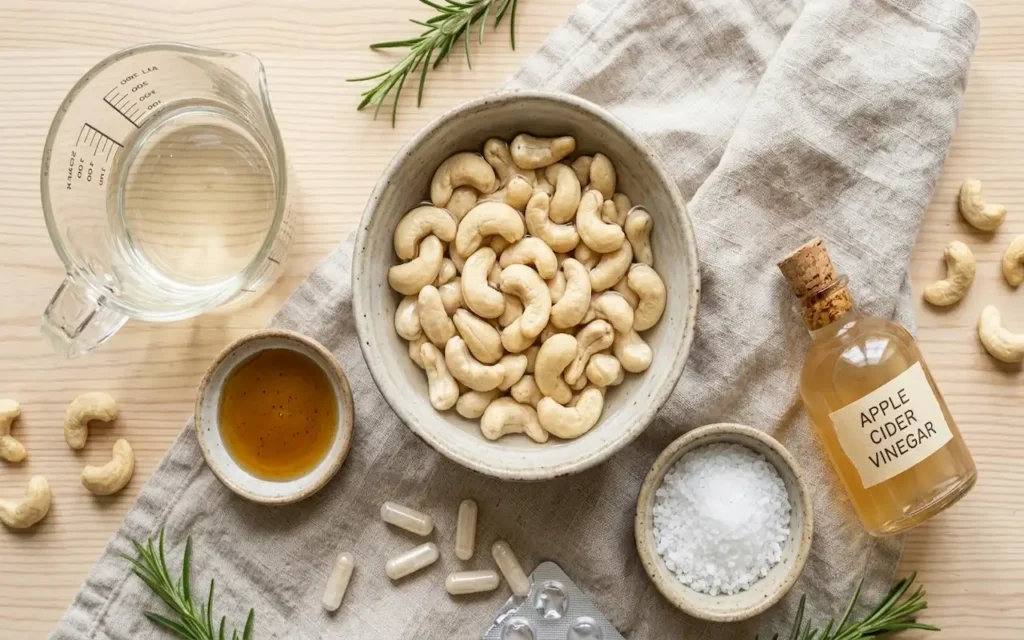
Raw cashews (1 cup). The base of the entire recipe. Raw cashews are essential: they have a neutral, creamy flavor and a fat content that blends to a completely smooth, ivory-colored cream after soaking. Roasted cashews have a toasted, slightly bitter flavor profile that will persist through the culturing and emulsification process and produce a finished butter with an off-flavor. Do not substitute.
Refined coconut oil (half a cup, melted). Refined (not virgin) coconut oil is the correct choice here for two reasons. First, it has a neutral flavor, whereas virgin coconut oil has a distinct coconut taste that will come through in the finished butter and in anything you bake with it. Second, its melting point (approximately 24 degrees C) gives the finished butter its solid-at-refrigerator-temperature, soft-at-room-temperature behavior that closely mirrors dairy butter.
Probiotic capsules (2 capsules, opened). The active bacterial cultures in standard probiotic capsules (Lactobacillus acidophilus and similar strains) are what ferment the cashew cream during the culturing period. Open the capsules and add the powder directly to the blended cashew cream. Most standard probiotic supplements available at health food stores or pharmacies work for this application: look for a product with at least 10 billion CFU per capsule.
Sunflower lecithin (1 tablespoon). Lecithin is a phospholipid that acts as an emulsifier, binding the water-based cashew cream and the oil-based coconut oil into a stable, homogeneous mixture rather than allowing them to separate. Sunflower lecithin (available in powder or liquid form at health food stores) is preferred over soy lecithin for a cleaner flavor in this application.
Apple cider vinegar (1 teaspoon). Added after culturing to reinforce the tangy, buttermilk-like flavor note that the fermentation develops. Use raw, unfiltered apple cider vinegar.
Fine sea salt (half to three quarters of a teaspoon, to taste). Salt is a flavor amplifier and a preservation aid. Adjust the amount based on whether you are making a salted or unsalted version for baking.
Step-by-Step Guide to Making Cultured Vegan Butter
Step 1: Soak and Blend the Cashews
Place the raw cashews in a bowl and cover with cold filtered water by at least 2 inches. Soak for a minimum of 8 hours, or overnight. Soaking softens the cashews and removes some of the phytic acid that can produce slight bitterness, and it is what allows them to blend to the completely smooth, velvet-like cream that the recipe requires.
After soaking, drain the cashews and rinse thoroughly. Transfer to a high-powered blender with 3 tablespoons of fresh filtered water. Blend on high for 2 to 3 minutes, scraping down the sides every 30 seconds, until the mixture is completely smooth with no visible cashew pieces or granular texture. The cream should look like thick, ivory-colored dairy cream. If your blender leaves any texture, blend for an additional minute before proceeding.
Step 2: Culture the mixture.
Transfer the smooth cashew cream to a clean glass bowl or jar. Open the two probiotic capsules and empty the powder contents into the cashew cream. Stir thoroughly with a clean spoon to distribute the cultures evenly through the cream.
Cover the bowl loosely with a clean kitchen towel or cheesecloth (not a tight lid, as the fermentation process produces a small amount of CO2 that needs to escape) and leave at room temperature for 12 to 24 hours. The ideal culturing temperature is between 21 and 24 degrees C: a warm kitchen countertop is perfect. In cooler environments, place the bowl near a warm spot in the kitchen.
After 12 hours, taste the cream. It should have developed a mild, pleasant tanginess similar to natural yogurt or buttermilk. If it tastes flat, allow it to culture for the full 24 hours. Do not allow it to go beyond 24 hours at room temperature, as the fermentation can progress to an overly sour or unpleasant flavor.
Step 3: Emulsify with Coconut Oil
Gently melt the refined coconut oil until it is fully liquid but not hot: it should feel warm to the touch, not scalding. Hot oil added to the cashew cream will damage the cultures and may cause the mixture to separate.
Transfer the cultured cashew cream to the blender. With the blender running on medium speed, slowly pour the melted coconut oil into the cream in a thin, steady stream, similar to the technique for making mayonnaise. This gradual incorporation is what creates the stable emulsion: adding the oil too quickly causes it to separate rather than integrating.
Once all the oil is incorporated, add the sunflower lecithin, apple cider vinegar, and salt. Blend on high for 60 seconds until the mixture is completely homogeneous, glossy, and pourable. Taste and adjust salt or vinegar if needed.
Step 4: Chill and Set
Pour the emulsified butter mixture into silicone molds, a small loaf pan lined with parchment paper, or a clean glass jar depending on your intended use. If making it in a mold for a butter-pat shape, tap the mold gently on the counter to release any air bubbles, then smooth the surface with a spatula.
Refrigerate for a minimum of 4 hours, or until completely firm throughout. The butter will firm to a consistency close to cold dairy butter: solid enough to slice or cut, soft enough to spread within a minute of being removed from the refrigerator.
Homemade Miyoko’s Vegan Butter Recipe (Dairy-Free and Cultured)
- Yield: 1 cup (2 sticks) 1x
- Category: Condiment
- Cuisine: Vegan
Ingredients
- 1 cup raw cashews
- 1/2 cup refined coconut oil, melted
- 2 probiotic capsules
- 1 tablespoon sunflower lecithin
- 1 teaspoon apple cider vinegar
- 1/2 teaspoon sea salt
- 3 tablespoons filtered water
Instructions
- Soak the cashews overnight.
- Blend with water until completely smooth.
- Add probiotic powder and culture for 12–24 hours.
- Blend with melted coconut oil.
- Add lecithin, vinegar and salt.
- Blend until emulsified.
- Pour into a mold.
- Refrigerate until firm.
Notes
Store refrigerated for up to 2 weeks or freeze for up to 3 months.
Nutrition
- Serving Size: 1 tablespoon
- Calories: 95
- Sugar: 0g
- Sodium: 85mg
- Fat: 10g
- Saturated Fat: 6g
- Unsaturated Fat: 4g
- Trans Fat: 0g
- Carbohydrates: 1g
- Fiber: 0g
- Protein: 1g
- Cholesterol: 0mg
Best Homemade Baked Goods to Make with Vegan Butter
This homemade Miyoko’s vegan butter recipe behaves functionally like dairy butter in the majority of baking applications because it has been built around the same physical structure: emulsified fat with a solid-at-cold, liquid-at-warm behavior controlled by the coconut oil’s melting point. Here are the most rewarding applications from this site’s recipe collection.
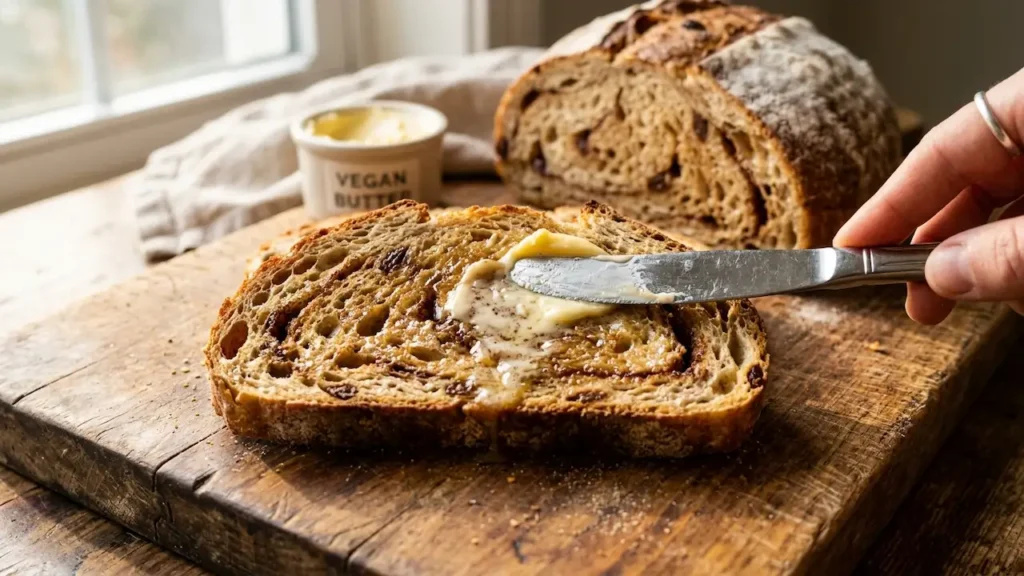
Use it as the fat component in our sourdough cinnamon bread to create a fully dairy-free version of the cinnamon-swirl filling, where the cultured tang of the butter adds a subtle complexity that pairs beautifully with the cinnamon and sourdough flavor.
Swap it into the fat component of our cottage cheese banana bread recipe for a vegan adaptation that maintains the same moist, protein-forward crumb structure with a slightly different fat profile.
Use it to create a flaky, dairy-free crust for our asparagus galette by cutting cold cubes of the homemade vegan butter into the flour using a pastry cutter or your fingertips, exactly as you would with dairy butter for a pâte brisée.
If you are new to vegan baking and encounter unexpected results when using fat substitutes in yeasted or quick breads, our “Why Did Banana Bread Collapse?” guide covers the fat-to-flour ratio issues and moisture balance problems that are the most common causes of structural failures in baked goods.
Tips for Success and Storage
Storage in the refrigerator: keep the homemade Miyoko’s vegan butter in a sealed container or wrapped tightly in parchment paper in the refrigerator for up to 2 weeks. The acidity from the culturing and the vinegar helps preserve it, but it will gradually lose its fresh tang after about 10 days.
Freezing for longer storage: this vegan butter freezes exceptionally well. Wrap individual portions tightly in parchment paper, then place in a sealed freezer bag. Frozen vegan butter keeps for up to 3 months and thaws in the refrigerator overnight with no loss of texture or flavor. This makes batch-making highly practical: make a double or triple quantity, freeze in individual portions, and thaw as needed.
For baking applications: use the butter cold from the refrigerator, just as you would dairy butter. Cold fat produces flakier pastry and more tender quick breads than softened fat because the cold pieces of fat create steam pockets as they melt in the oven rather than blending homogeneously into the dough.
For spreading: remove from the refrigerator 10 to 15 minutes before serving. The coconut oil base will soften to a spreadable consistency at room temperature relatively quickly.
Frequently Asked Questions
How Do You Make Miyoko’s Vegan Butter?
The home version of Miyoko’s vegan butter is made in four stages: blending soaked raw cashews to a smooth cream, culturing that cream with probiotic powder at room temperature for 12 to 24 hours, emulsifying the cultured cream with melted refined coconut oil, sunflower lecithin, and salt, and chilling the mixture until firm. The complete process takes about 15 minutes of active work and 12 to 24 hours of hands-off fermentation time.
What Happened to Miyoko’s Vegan Butter?
Miyoko’s Creamery, the company founded by chef and food activist Miyoko Schinner, has been available in major US grocery retailers since the mid-2010s and remains commercially available as of 2026. The brand has faced various business transitions over the years, including a period in 2022 when Miyoko Schinner stepped down as CEO amid a public dispute with the company’s board, which drew significant attention in the plant-based food community. The products themselves have continued under the Miyoko’s Creamery brand name.
What Are the Ingredients in Miyoko’s Vegan Butter?
The commercial Miyoko’s European Style Cultured Vegan Butter lists organic cashews, organic coconut oil, organic sunflower oil, cultures, salt, and sunflower lecithin as its primary ingredients. The homemade version in this recipe mirrors that composition closely, using raw cashews, refined coconut oil, probiotic cultures, sunflower lecithin, salt, and apple cider vinegar.
What Are the Three Ingredients in Vegan Butter?
The three essential structural ingredients in a functional vegan butter are a plant-based fat (coconut oil provides the solid-at-cold structure), a plant-based cream base (cashew cream provides the water component and the body), and an emulsifier (sunflower lecithin binds the fat and water phases together). Salt and culturing agents are additions that improve flavor but are not structurally required for the butter to set and function in baking.
Can I Use This Miyoko’s Vegan Butter Recipe for Baking Cookies?
Yes. Because the fat content and melting behavior of this homemade vegan butter closely mirror dairy butter, it works in cookies, cakes, quick breads, and pastry with minimal adjustment required. Use it in a 1:1 substitution for dairy butter by weight rather than by volume for the most reliable results, since homemade vegan butter can vary slightly in density between batches.
Does It Taste Exactly Like Dairy Butter?
The culturing process brings the flavor notably closer to dairy butter than any uncultured plant-based spread can achieve, particularly the tangy, slightly complex finish that characterizes good European-style cultured butter. The texture at room temperature is slightly softer than dairy butter due to the coconut oil base, and the flavor, while genuinely close, has a subtle cashew warmth that distinguishes it from dairy on careful tasting. Most people using it in baking find the flavor difference undetectable in the finished product.
Can I Use Roasted Cashews Instead of Raw?
No. Roasted cashews have a toasted, slightly bitter flavor that carries through the entire recipe and produces a finished butter with an off-flavor, particularly after culturing, which amplifies existing flavor notes rather than neutralizing them. Raw cashews are essential for a neutral, clean base.
Related Reading
- Honey Peach Cream Cheese Cupcakes – A seasonal dessert that works beautifully with a dairy-free butter swap
- Boston Cream Donut – A classic pastry project that explores cultured flavors from a different angle
- What Can I Do With Old Sourdough Discard – More ideas for fermented, cultured baking projects that pair perfectly with this vegan butter.