
By Chef Alex | Updated June 17, 2026
There is something magical about the first asparagus spear of spring, that tender, bright green promise that warmer days are finally here. And if you are looking for the most elegant, effortless way to celebrate this seasonal treasure, let me introduce you to the asparagus galette.
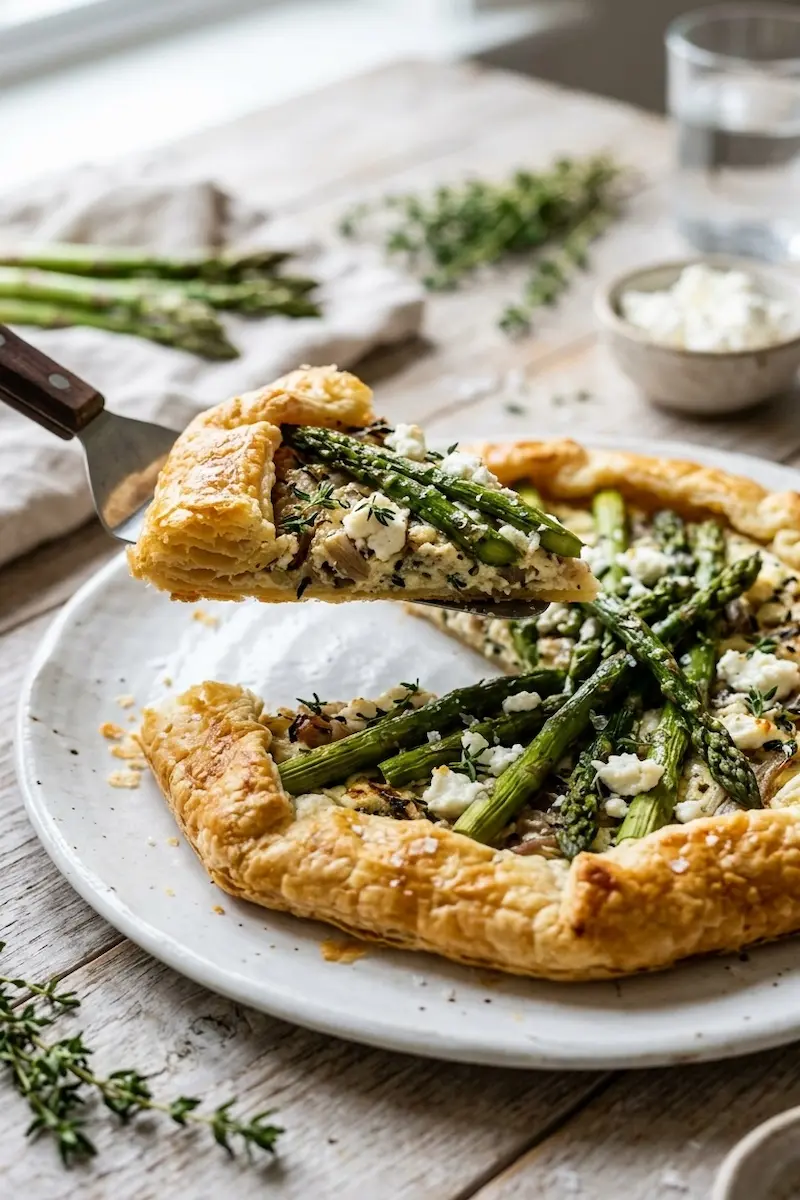
Imagine a rustic, free-form tart with a golden, impossibly flaky puff pastry crust, generously layered with creamy goat cheese, artfully arranged asparagus spears, and a whisper of fresh thyme. It is the kind of dish that looks like it came from a Parisian bistro, yet it comes together in your own kitchen with barely any effort: just five simple steps and 45 minutes from start to finish.
Unlike a formal tart that demands precision, a galette celebrates imperfection. Fold the edges however you like. Arrange the asparagus in whatever pattern feels right. Let the cheese melt and bubble into its own beautiful chaos. That is the French secret behind this style of baking: rustic elegance is far easier to achieve than most people assume.
Whether you are hosting a spring brunch, planning an Easter lunch or simply craving a light yet impressive dinner, this asparagus galette recipe delivers every time. It is vegetarian, it photographs beautifully, and it is about to become your new seasonal signature dish.
Love elegant spring dishes? Do not miss our honey peach cream cheese cupcakes for another seasonal showstopper that works well alongside this galette on a brunch table.
Table of Contents
What Is an Asparagus Galette and Why Is It So Beloved?
The French Galette Tradition
A galette is, at its core, a rustic tart with free-form, folded edges rather than the precise, fluted border of a formal tart baked in a pan. The tradition originates in the French countryside, particularly Brittany, where home bakers needed a forgiving format that did not require a tart pan or exact technique to produce something genuinely good. The freedom of shape is not a shortcut. It is the entire point: a galette is meant to look handmade, slightly uneven, and entirely natural, which is exactly what gives it its particular charm.
Over recent decades, the galette format has expanded well beyond its traditional fruit-filled origins into savory territory, and the asparagus galette is one of the clearest examples of that evolution: a seasonal vegetable, a good cheese, and a buttery pastry, assembled with the same relaxed confidence that defines the format.
What Makes an Asparagus Galette Unique
This rustic asparagus tart distinguishes itself from a classic quiche or pie in several specific ways. It uses puff pastry rather than a traditional pâte brisée, producing a lighter, more dramatically flaky base. Spring asparagus is the unambiguous star rather than a supporting ingredient. Goat cheese provides richness and a gentle tang that balances the vegetable’s slight bitterness. The presentation is intentionally artistic and free, with no two galettes looking quite the same. And the eating experience delivers three distinct textures at once: a crisp, shattering crust; a creamy melted cheese layer; and tender-crisp asparagus with just enough bite remaining.
Why Asparagus Galettes Dominate Spring Menus
Fresh asparagus has a relatively short season, generally running from March through June depending on region, which makes any asparagus-forward recipe feel genuinely timely rather than available year-round. The galette format also offers a particular kind of rustic elegance that suits entertaining: it looks considerably more impressive than the effort required to make it. It is fully vegetarian, which makes it an easy centerpiece for mixed gatherings without requiring a separate meat dish. And visually, the deep green spears fanned across a golden crust are exactly the kind of composition that performs well in natural light, which has made the asparagus galette a recurring favorite across food blogs and social platforms each spring.
The Science Behind the Perfect Asparagus Galette
Puff Pastry Chemistry
Puff pastry achieves its dramatic layers through an entirely different mechanism than yeasted dough. Alternating thin layers of butter and dough are folded repeatedly, and when the assembled pastry hits a hot oven, the water content in the butter converts rapidly to steam. That steam is what physically pushes the layers apart, creating the hundreds of paper-thin sheets that puff pastry is named for. No yeast or chemical leavening is involved: the lift is purely mechanical, driven by steam pressure between layers of fat and flour.
Temperature control is the single most important variable in this process. The butter must remain solid and cold right up until the moment it enters the oven. If the butter softens or melts into the dough before baking, the layers merge into a single greasy mass instead of separating into distinct sheets, and the dramatic flake is lost entirely. This is also why resting the assembled galette in the refrigerator before baking is not an optional step: it re-solidifies any butter that softened during shaping and ensures a clean, dramatic rise in the oven.
Asparagus Preparation Secrets
Whether to blanch the asparagus before baking depends on the thickness of the spears. Thin asparagus spears (pencil-thin) can go directly onto the galette raw, since the relatively short oven time is sufficient to cook them through to tender-crisp. Thicker spears benefit from a brief 60 to 90 second blanch in boiling water followed immediately by an ice bath, which jump-starts the cooking process so the asparagus finishes in sync with the pastry rather than remaining underdone in the center.
The bottom few inches of an asparagus spear are typically tough and fibrous. The traditional method is to bend each spear gently near the base: it will snap naturally at the point where the tender section ends and the woody section begins, which is more reliable than guessing at a uniform cut length. Moisture management matters as much for asparagus as it does for the pastry: spears should always be patted completely dry after washing or blanching, since any residual surface water will release as steam during baking and contribute to a soggy crust underneath.
Cheese Melting Science
Goat cheese is the traditional choice for an asparagus galette because of its specific melting behavior: it softens and becomes creamy at oven temperature without fully liquefying the way a high-moisture cheese like mozzarella would, which keeps the filling layer cohesive rather than runny. Feta behaves similarly but contributes a sharper, saltier flavor. Ricotta is creamier and milder but carries more moisture, which requires a slightly more careful approach to drainage beforehand to avoid a wet filling.
The balance between fat and acidity is what makes the cheese layer work with the asparagus rather than simply sitting alongside it: goat cheese’s natural tang cuts through the richness of the puff pastry and complements the slightly bitter, green flavor of the asparagus in a way that a purely fatty cheese cannot replicate. For a vegan version, a firm cashew-based cheese or a well-seasoned tofu ricotta can approximate the same textural role, though the tang will need to come from added lemon juice or apple cider vinegar rather than fermentation.
The Best Asparagus Galette Recipe (Step-by-Step)
The Ingredient Stack
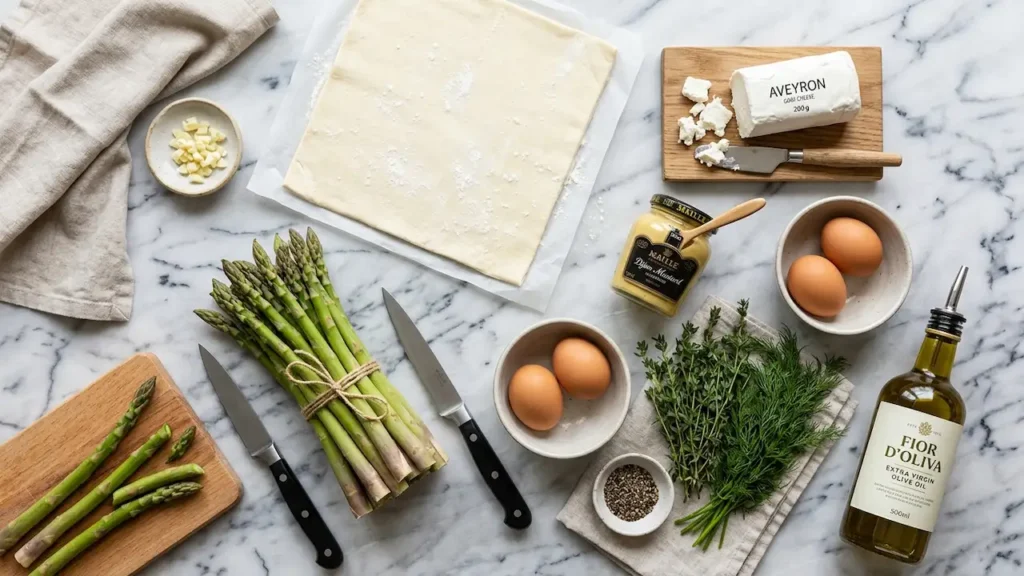
- 1 sheet of puff pastry (store-bought or homemade), kept cold until ready to use
- 1 bunch of fresh asparagus, green, thin to medium thickness
- 4 to 5 oz of goat cheese, either a soft log or fresh crumbled variety
- 1 large egg, beaten, for the egg wash
- 1 to 2 tablespoons Dijon mustard, for the base flavor and moisture barrier
- fresh herbs: thyme, dill or chives, a small handful
- olive oil, salt and black pepper
- optional additions: roasted garlic, toasted pine nuts, grated parmesan
Step-by-Step Preparation
Step 1: Prepare and roll out the puff pastry. If using store-bought pastry, thaw it according to package instructions but keep it cold; do not let it sit at room temperature longer than necessary. Roll it out gently on a lightly floured sheet of parchment paper into a rough rectangle or oval, roughly 12 by 9 inches. Transfer the parchment with the pastry directly onto a baking sheet.
Step 2: Spread the mustard layer. Spread a thin, even layer of Dijon mustard across the pastry, leaving a 1.5 to 2 inch border uncovered around the edges for folding. This layer is not optional: it acts as a moisture barrier between the asparagus and the pastry, preventing the crust from becoming soggy where the vegetables sit while also contributing a subtle savory depth.
Step 3: Distribute the goat cheese. Crumble or dot the goat cheese evenly over the mustard layer, again staying within the border. The cheese should be distributed generously but not piled so thickly that it overwhelms the pastry’s structure.
Step 4: Arrange the asparagus artistically. Lay the asparagus spears over the cheese in whatever pattern appeals to you: alternating tip directions, a fan shape, or simple parallel rows all work well. This is the step where the galette’s rustic, handmade character comes through most clearly, so do not aim for machine-like precision.
Step 5: Fold the edges and apply the egg wash. Fold the uncovered border of pastry up and over the filling, pleating loosely as you go around the perimeter. Brush the folded edges with the beaten egg mixed with a small amount of olive oil, which produces a deeper golden color and a slight sheen once baked.
Step 6: Bake until golden and crisp. Bake at 400 to 425 degrees F (200 to 220 degrees C) for 22 to 28 minutes until the crust is deeply golden brown and visibly flaky at the folded edges and the asparagus is tender with light browning at the tips.
Step 7: Finish with fresh herbs and seasoning. Remove from the oven and immediately scatter fresh thyme, dill, or chives over the top, along with a final pinch of flaky salt and a crack of black pepper. Let rest for 5 minutes before slicing.
Texture Secrets for Bakery-Quality Results
Keep the pastry genuinely cold right up until it goes into the oven: if it has softened noticeably during assembly, refrigerate the fully assembled galette for 10 to 15 minutes before baking. Pat the asparagus completely dry before arranging it on the cheese layer, since any surface moisture works directly against the crispness of the finished crust.
Resist the temptation to overload the filling: a thinner, more restrained layer of cheese and asparagus bakes more evenly and produces a crisper result than a heavily piled version. Bake on a preheated baking sheet or pizza stone if you have one, since the immediate contact with high heat helps set the bottom crust quickly. And do not compromise on oven temperature: 400 to 425 degrees F is the range that produces the dramatic, well-defined flake that distinguishes a great puff pastry asparagus galette from a merely acceptable one.
Recipe Card: Asparagus Galette
Prep time: 20 minutes | Cook time: 25 minutes | Total time: 45 minutes | Yield: 6 servings
| Nutrient | Amount per Serving |
|---|---|
| Calories | approximately 280 to 320 kcal |
| Total Fat | 19 to 22g |
| Carbohydrates | 20 to 24g |
| Protein | 7 to 9g |
| Fiber | 2g |
Strategic Pairing: Complete Your Asparagus Galette Experience
Best Beverages to Pair
A dry white wine such as Sauvignon Blanc or Sancerre is the classic pairing for this rustic asparagus tart, as its acidity mirrors the brightness of the asparagus and cuts through the richness of the goat cheese and pastry. A Provence-style rosé works equally well for a slightly softer pairing. Champagne adds genuine springtime elegance for a brunch or celebratory occasion. For a non-alcoholic option, sparkling water with a generous squeeze of lemon provides the same palate-cleansing acidity without the alcohol.
When to Serve Asparagus Galette
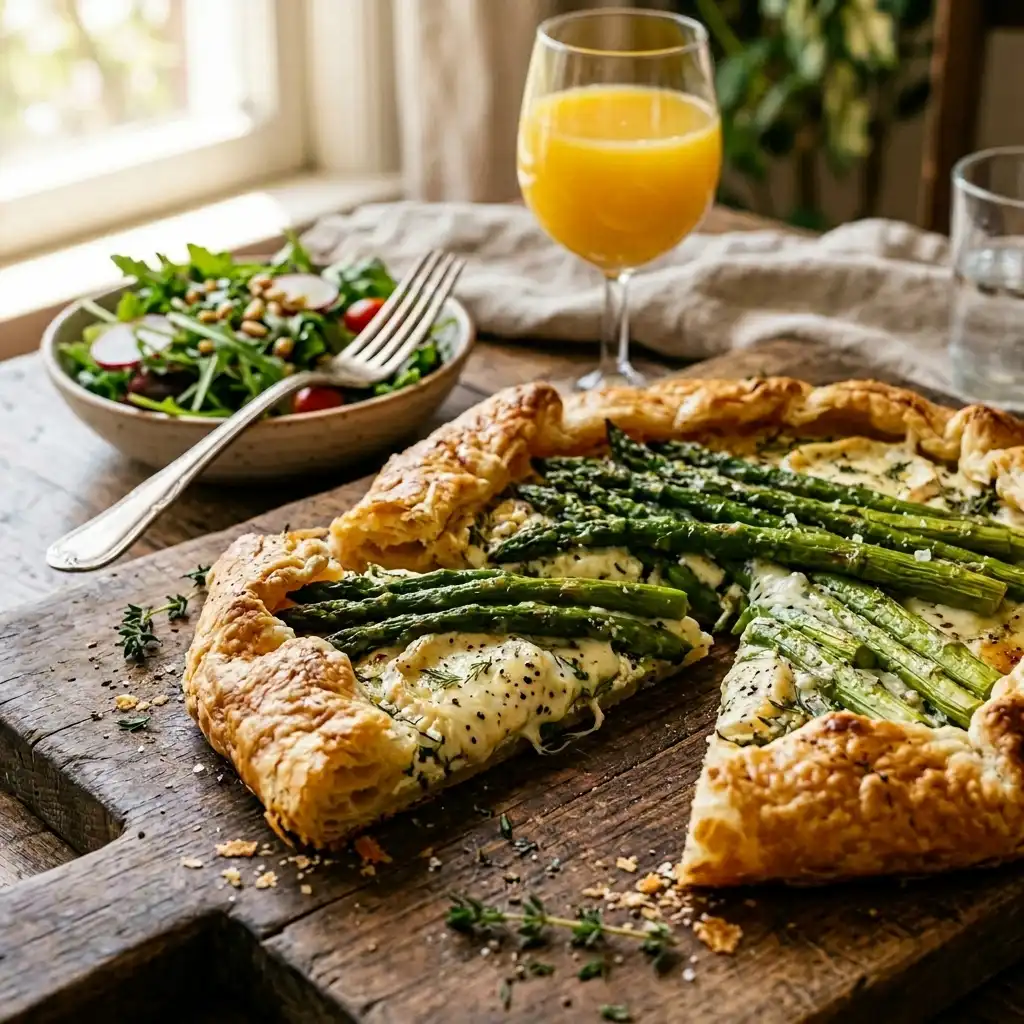
This spring galette fits naturally into a weekend brunch spread, an Easter lunch table, a light dinner paired with a simple green salad, an elegant picnic that travels well at room temperature, or a dinner party appetizer course cut into smaller wedges.
Complementary Side Dishes
A green salad dressed with a Dijon mustard vinaigrette echoes the mustard layer inside the galette and ties the whole plate together. A light spring vegetable soup makes a satisfying starter ahead of the galette. Poached eggs served alongside transform this into a complete, substantial brunch plate. And a few slices of prosciutto or Parma ham on the side add a salty, savory contrast for anyone who wants a non-vegetarian element on the table without it going inside the galette itself.
Asparagus Galette Variations and Customizations
Classic goat cheese and asparagus. Fresh goat cheese, green asparagus, and fresh thyme. The original and most timeless version of this asparagus galette recipe is the one most worth mastering before attempting any variation.
Four cheese asparagus galette. A blend of mozzarella, parmesan, goat cheese, and feta for anyone who wants maximum cheese flavor and a more indulgent, melty filling layer.
Prosciutto and asparagus galette. A layer of thin prosciutto slices placed beneath the cheese, which crisps slightly at the edges during baking and adds a salty counterpoint to the asparagus’s sweetness.
Caramelized onion and asparagus. A base layer of slowly caramelized onions beneath the cheese, adding a deep, sweet-savory dimension that pairs particularly well with the sharper flavor of feta.
Vegan asparagus galette. A store-bought or homemade vegan puff pastry, a cashew-based or tofu ricotta in place of goat cheese, and nutritional yeast worked into the filling for a savory, cheese-like depth without any dairy.
Pesto asparagus galette. Fresh basil pesto spread in place of the Dijon mustard layer, giving the entire galette an Italian-leaning herbal brightness instead of the more classically French mustard tang.
Egg-topped asparagus galette. A poached or fried egg added on top of each individual slice after baking, which turns this into a complete, protein-forward brunch dish with a luxurious runny yolk finishing sauce.
Frequently Asked Questions About Asparagus Galette
What Is the Difference Between a Galette and a Tart?
A tart is typically baked in a dedicated tart pan with a fluted or straight edge, producing precise, uniform sides. A galette is free-form, folded by hand directly on a baking sheet with no pan required, which gives it its characteristically rustic, slightly irregular appearance. Both can use the same fillings; the format and the level of required precision are what separate them.
Can I Use Store-Bought Puff Pastry?
Yes, and store-bought puff pastry is the practical choice for most home bakers making this recipe. Look for an all-butter variety if available, since butter-based puff pastry produces a noticeably better flavor and flake than versions made with vegetable shortening. Keep it cold and work efficiently once it is out of the refrigerator.
Do I Need to Blanch Asparagus Before Baking?
Thin, pencil-sized spears do not need blanching since the oven time is sufficient to cook them through. Thicker spears benefit from a quick 60 to 90 second blanch followed by an ice bath, which ensures they finish tender at the same time the pastry finishes baking, rather than remaining underdone in the center.
Why Is My Galette Soggy in the Middle?
This is almost always caused by excess moisture, either from asparagus that was not patted dry before assembly, from skipping the mustard layer that acts as a moisture barrier, or from an overloaded filling that releases more liquid during baking than the crust can handle. Address all three factors, and the soggy bottom problem resolves.
Can I Make Asparagus Galette Ahead of Time?
The pastry can be rolled out and the galette fully assembled up to a few hours in advance, then refrigerated unbaked until you are ready to bake it, which actually benefits the final flake since the cold pastry holds its shape better in the oven. It is best baked fresh rather than reheated for serving, since reheating softens the crisp crust significantly.
What Cheese Works Best for Asparagus Galette?
Goat cheese is the traditional and most reliable choice because of its creamy, non-runny melting behavior and its natural tang, which balances the asparagus and pastry. Feta is a good substitute for a sharper, saltier result. Ricotta works but requires draining beforehand to avoid excess moisture in the filling.
Can I Freeze Asparagus Galette?
An unbaked, fully assembled galette freezes reasonably well: wrap tightly and freeze for up to 1 month, then bake directly from frozen, adding several extra minutes to the baking time. A fully baked galette can also be frozen, though the texture of the crust will be noticeably softer upon reheating compared to a freshly baked one.
Common Mistakes That Ruin Asparagus Galettes
Warm puff pastry. Pastry that has softened loses its distinct layers and bakes into a denser, less flaky result. Always work with cold pastry and refrigerate the assembled galette briefly if it has warmed up during shaping.
Overloaded toppings. Too much cheese or too many asparagus spears release excess moisture during baking, resulting in a soggy, understructured crust. Less filling produces a better, crisper result than a generously piled one.
Skipping the mustard layer. Without this barrier, moisture from the asparagus migrates directly into the pastry below it. The Dijon mustard layer is doing real structural work, not just adding flavor.
Wrong oven temperature. Baking at too low a temperature prevents the dramatic puff and crisp that defines good puff pastry. The 400 to 425 degree F range is necessary, not optional, for the best texture.
Not drying the asparagus. Residual surface water on the asparagus spears converts to steam during baking and contributes directly to a soggy bottom. Pat thoroughly dry after washing or blanching every time.
Conclusion: Bringing Spring to Your Table
This asparagus galette recipe proves that an elegant, dinner-party-worthy dish does not require complicated technique, just attention to a few details that genuinely matter: cold pastry, dry asparagus, a proper moisture barrier, and a hot oven. Five simple steps and 45 minutes stand between you and a rustic French tart that looks considerably more impressive than the effort it actually requires.
Whether this becomes your new Easter tradition, your go-to spring brunch centerpiece or simply a light dinner with a salad on a Tuesday, this vegetarian asparagus tart deserves a permanent spot in your seasonal rotation.
Related Reading: Your Spring and Savory Baking Toolkit
🌷 Keep the Spring Baking Momentum Going!
Loved this asparagus galette? Here are 5 more recipes that pair perfectly or explore similar techniques:
🧁 Cottage Cheese Banana Muffins — Protein-forward brunch favorite
🍑 Honey Peach Cream Cheese Cupcakes—A seasonal dessert showstopper
🍫 Chocolate Mousse & Gourmet Banana — Elegant dessert finish
🧅 Keto Onion Rings — Crispy low-carb appetizer
🍞 Cottage Cheese Banana Bread — A wholesome everyday staple
Your spring entertaining game is about to level up!