
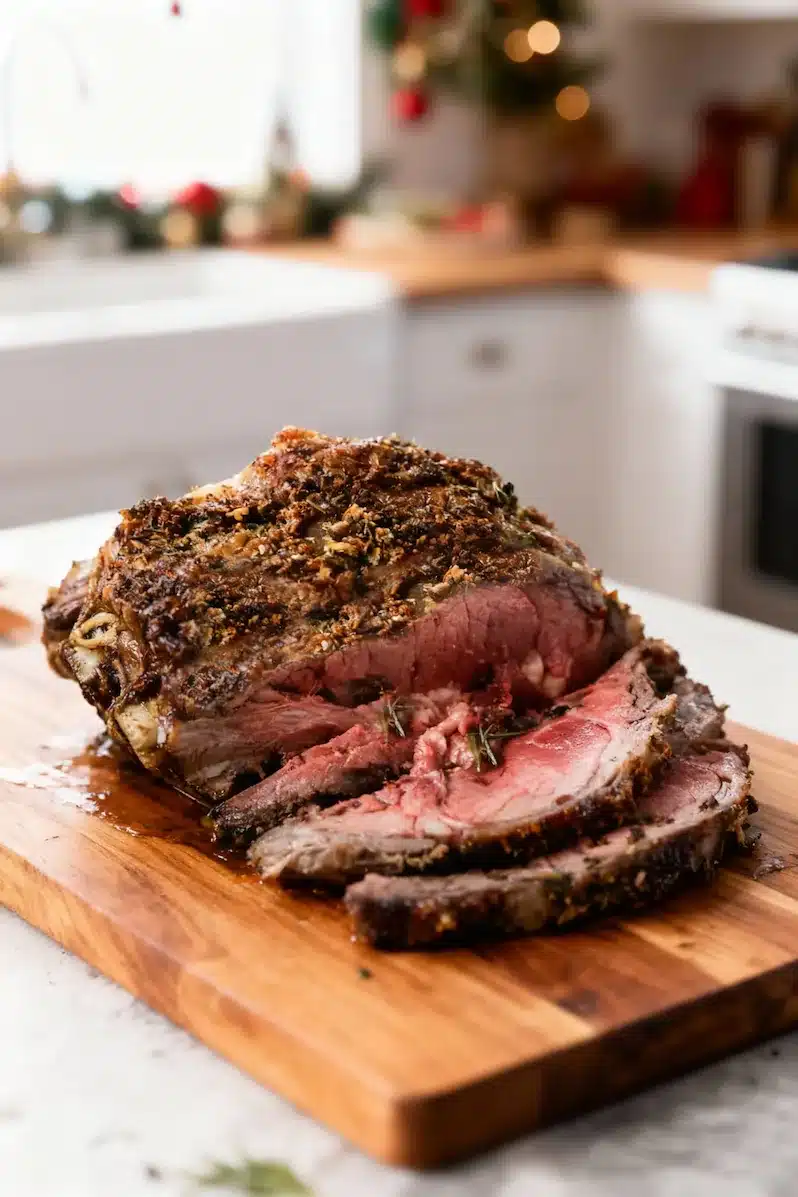
His prime rib recipe walks you through preparing a restaurant-quality roast at home using a simple garlic and herb rub that delivers rich flavor without complicated steps. Cooking prime rib at home saves money and gives you full control over doneness, which matters when working with an expensive cut. A practical buying rule helps with planning: count on one pound per person for a standard gathering, with leftovers welcome.
The method starts with a high oven temperature of 500°F to create a deep crust, then drops to a lower heat to gently cook the interior. This approach creates a tender center with a flavorful exterior when you follow internal temperature targets closely. A meat thermometer plays a key role, since guessing leads to overcooking.
Resting the roast for 30 minutes under foil allows juices to redistribute, which keeps every slice moist. The guide also covers how to choose quality beef, whether bone-in or boneless works best for your needs, and how to plan sides that balance the richness of the roast. For example, pairing this dish with classic comfort options or lighter starters from adorarecipes keeps the meal balanced, while seafood appetizers such as those discussed in langostino lobster tails can round out a holiday table.
By following this prime rib recipe, home cooks gain confidence, reduce waste, and serve a centerpiece that looks impressive while staying approachable.
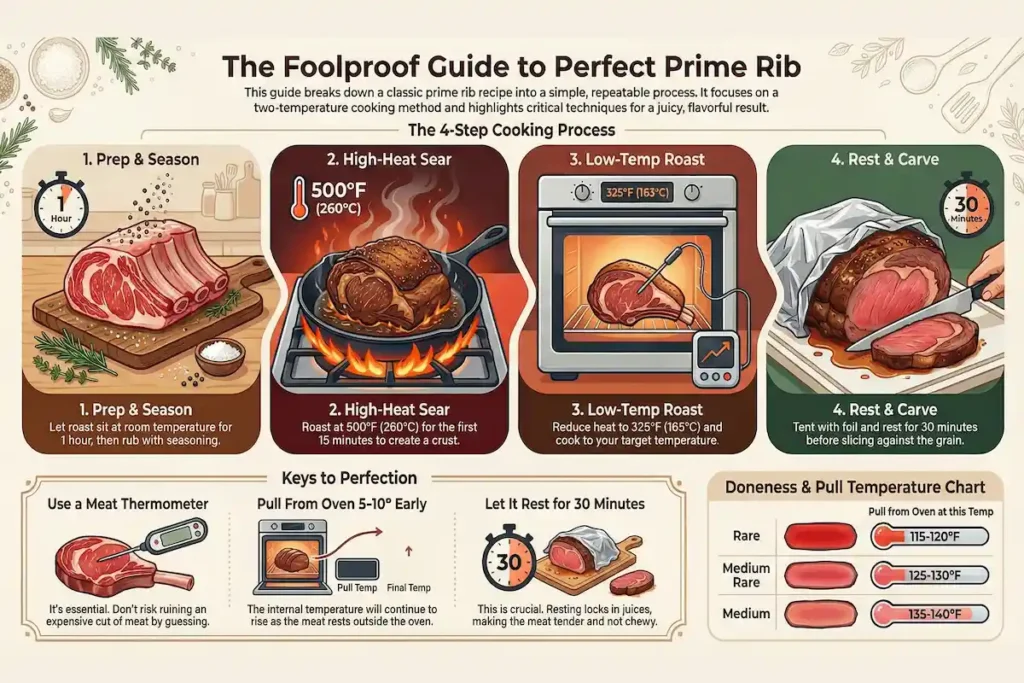
Table of Contents
Prime Rib Recipe Guide for Home Cooks
This prime rib recipe uses a garlic and herb rub with a high-heat start followed by gentle roasting for a juicy, tender roast.
- Prep Time: 15 minutes
- Cook Time: 90 minutes
- Total Time: 2 hours 15 minutes
- Yield: 6 servings 1x
- Category: Dinner
- Method: Roasting
- Cuisine: American
- Diet: Gluten Free
Ingredients
1 bone-in prime rib roast (5–7 lb)
4 cloves garlic, minced
2 tbsp olive oil
2 tsp kosher salt
1½ tsp black pepper
1 tbsp fresh rosemary, chopped
1 tbsp fresh thyme, chopped
Instructions
1. Remove prime rib from refrigerator 1 hour before cooking.
2. Preheat oven to 500°F.
3. Mix garlic, olive oil, salt, pepper, rosemary, and thyme.
4. Rub seasoning evenly over the roast.
5. Place roast on rack in roasting pan.
6. Roast at 500°F for 15 minutes.
7. Reduce oven to 325°F and continue roasting.
8. Remove the roast at 120–125°F internal temperature.
9. Tent loosely with foil and rest 30 minutes.
10. Slice against the grain and serve.
Notes
Use a meat thermometer for accuracy.
Resting is required for juicy slices.
Bone-in roasts cook more evenly.
Nutrition
- Serving Size: 1 slice
- Calories: 650
- Sugar: 0g
- Sodium: 780mg
- Fat: 52g
- Saturated Fat: 22g
- Unsaturated Fat: 26g
- Trans Fat: 0g
- Carbohydrates: 1g
- Fiber: 0g
- Protein: 48g
- Cholesterol: 190mg
Understanding the Prime Rib Recipe Before Cooking
Cooking a prime rib recipe feels intimidating the first time, especially when you stand in front of a large, expensive cut of beef. I still remember the first holiday dinner where I chose to make prime rib instead of ordering out. The pressure felt real. Still, once you understand what this cut is and how to plan portions correctly, the entire process feels far more manageable. This section breaks down those basics so you start with confidence instead of stress.
Choosing the Right Cut for This Prime Rib Recipe
A prime rib comes from the rib section of the cow, close to cuts like ribeye steaks. Most butchers sell it as either bone-in or boneless. For a classic prime rib recipe, bone-in roasts cook more evenly and deliver deeper flavor because the bones protect the meat during roasting. Many experienced cooks ask the butcher to cut the bones away and tie them back on. That method keeps carving simple while preserving flavor.
When shopping, look for good marbling and a firm texture. Quality beef makes a clear difference, especially when you rely on simple seasoning. If you want to understand how prime rib compares to other beef cuts, the beef breakdown guide at Ultimate Guide to Beef Steak Names and Cuts gives helpful context. Choosing the right cut sets the tone for the entire meal.
How Much Prime Rib to Buy Per Person
Portion planning matters just as much as seasoning in any prime rib recipe. A reliable rule calls for one pound per person, which includes bones. For larger holiday meals with many side dishes, you can reduce that slightly to about three-quarters of a pound per guest. Smaller dinners or gatherings with hearty appetites benefit from sticking to the full pound.
Leftovers rarely go to waste. Sliced prime rib works well for sandwiches, wraps, or next-day meals like the comfort-style dishes often featured on adorarecipes Planning portions carefully helps control cost while still serving generous plates. Once sizing feels clear, the rest of the cooking process becomes far easier to handle.
Preparing the Prime Rib Recipe for Maximum Flavor
Once you’ve selected the cut and planned portions, preparation becomes the step where this prime rib recipe really starts to shine. Flavor builds long before the roast goes into the oven. Simple ingredients, correct timing, and attention to detail shape the final result. This stage sets the foundation for a crusty exterior and a tender center that slices cleanly.
Garlic and Herb Rub for Prime Rib Recipe Success
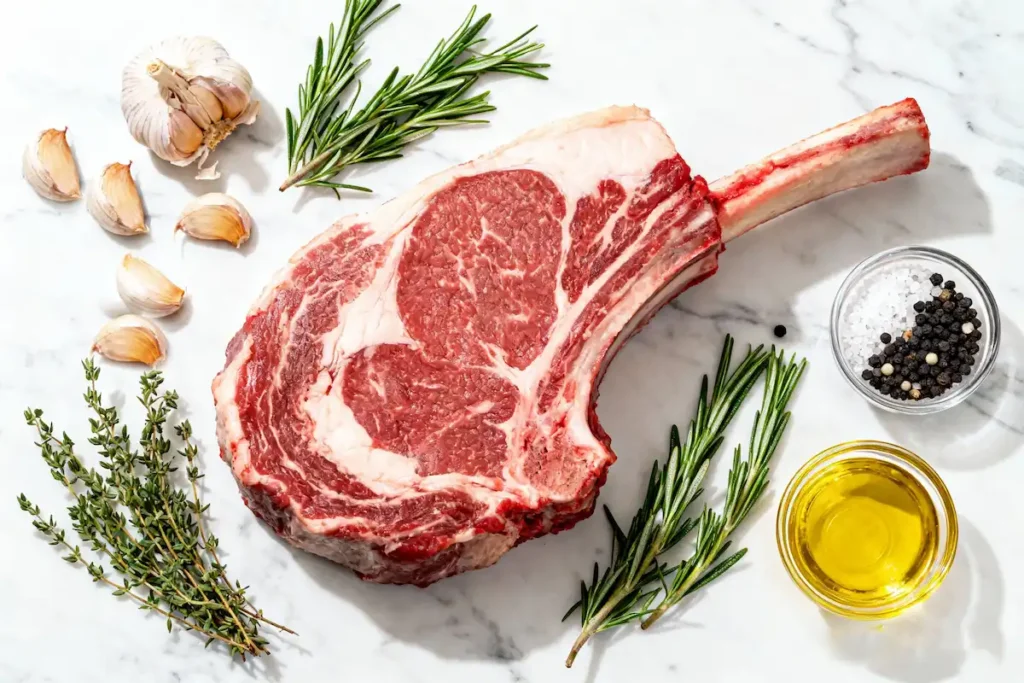
A classic prime rib recipe relies on restraint. You don’t need complicated marinades or heavy sauces. A garlic and herb rub brings out the natural richness of the beef without masking it. Fresh garlic, coarse salt, cracked black pepper, rosemary, and thyme work together to create balance. Olive oil helps the seasoning cling to the meat and promotes browning during roasting.
Apply the rub generously, pressing it into every surface. Don’t rush this step. Even coverage leads to consistent flavor in every slice. If you enjoy pairing rich meats with bold starters, dishes like seafood sauces discussed in crab cake sauce recipe complement prime rib well without competing with it. Simple seasoning allows the beef to remain the centerpiece of the meal.
Bringing Prime Rib to Room Temperature
Temperature control plays a major role in how a prime rib recipe turns out. Cold meat placed directly into a hot oven cooks unevenly. The exterior tightens too quickly while the center lags behind. Letting the roast rest at room temperature for about one hour helps it cook more evenly from edge to center.
Place the seasoned roast on a rack and leave it uncovered during this time. This short rest also dries the surface slightly, which supports better browning once roasting begins. Food safety remains intact within this window. Starting with evenly tempered meat reduces stress later in the process and improves texture. If you enjoy planning full menus, pairing prime rib with lighter starters such as ideas found at ceviche and aguachile keeps the meal balanced.
Cooking Method That Makes This Prime Rib Recipe Reliable
This is the moment where many cooks feel nervous, but this prime rib recipe removes guesswork by following a clear, two-stage cooking method. The goal stays simple: build a flavorful crust first, then gently cook the interior to the right temperature. When you trust the process and focus on temperature instead of time alone, the results stay consistent.
High-Heat Start for Crust Development
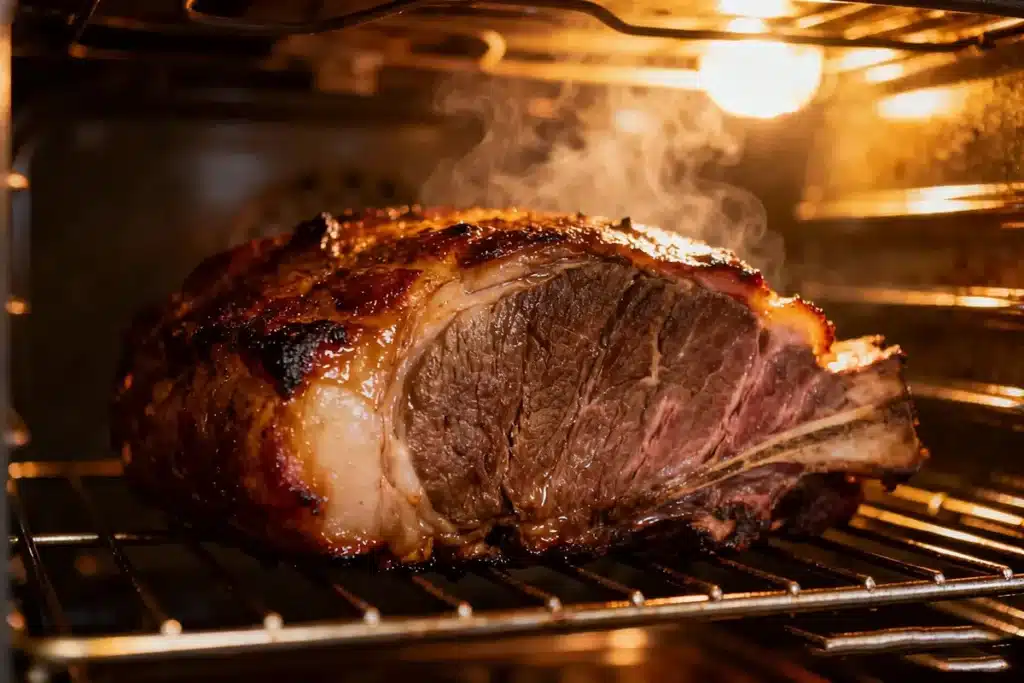
A strong crust defines a great prime rib recipe. Preheat the oven to 500°F before placing the roast inside. This initial blast of heat jumpstarts browning and creates a deeply savory exterior. During the first 15 minutes, the surface fat begins to render while the seasoning forms a firm, aromatic crust.
Keep the oven door closed during this stage. Opening it releases heat and disrupts the process. The roast should look browned on the outside but remain largely raw inside. This contrast sets the stage for even cooking later. Many cooks pair this rich main dish with lighter sides or simple starches, similar to the balance found in meals like those shared in the potato soup recipe, where comfort and restraint work together.
Lower Heat Roasting and Timing Guidance
After the initial sear, reduce the oven temperature to 325°F. This slower roasting phase allows the interior of the meat to cook evenly without drying out. Cooking time varies by weight, but most prime rib recipe guides suggest about 13 to 15 minutes per pound for medium-rare. Still, time alone should never be the deciding factor.
A meat thermometer gives clarity. Insert it into the thickest part of the roast, avoiding bone. Pull the roast when it reads about 5 to 10 degrees below your target, since the temperature continues rising during rest. If you enjoy learning about different beef preparations, the roast comparison at Pikes Peak Beef Roast offers helpful perspective on why prime rib benefits from this gentle finish.
Resting, Carving, and Serving the Prime Rib Recipe
Once the roast leaves the oven, the final steps of this prime rib recipe matter just as much as the cooking itself. Many cooks rush here, but patience rewards you with tender slices and clean presentation. This stage turns a well-cooked roast into a memorable centerpiece.
Resting the Prime Rib Correctly
Resting allows the juices to redistribute throughout the meat, which keeps every slice moist. After removing the roast from the oven, tent it loosely with foil and let it rest for 30 minutes. During this time, internal temperature rises slightly, finishing the cook without additional heat.
Skipping this step leads to juices spilling onto the cutting board instead of staying inside the meat. That loss affects both flavor and texture. A rested roast slices cleanly and stays juicy from edge to center. If you enjoy structured cooking techniques, many comfort-style dishes across adorarecipes follow the same principle of resting to improve final texture.
Carving and Serving Tips
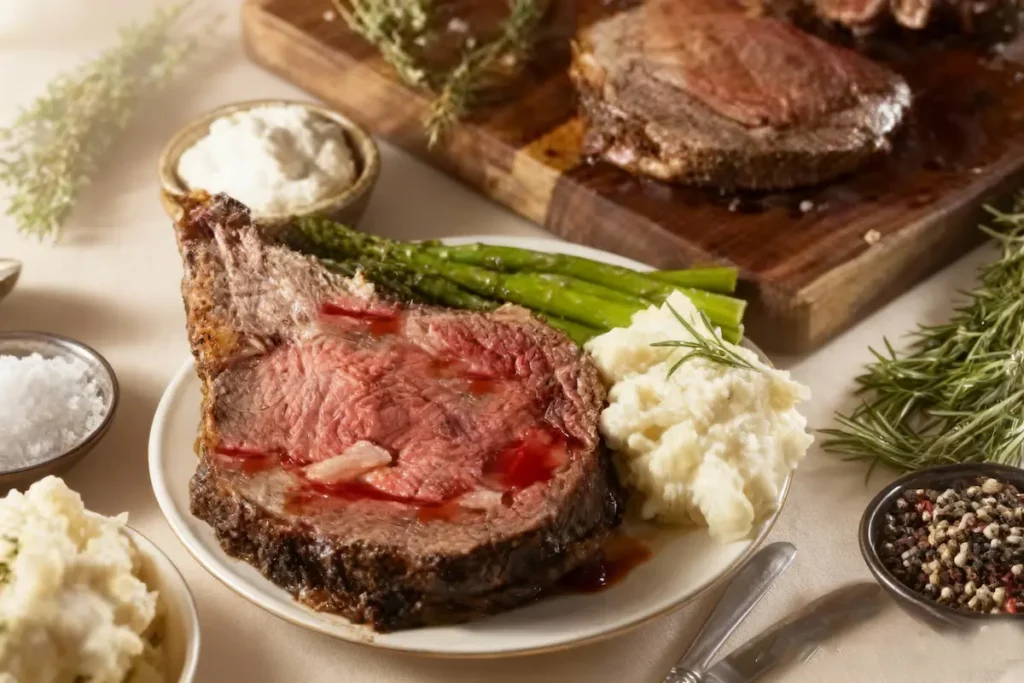
Carving completes the prime rib recipe. Remove the twine and separate the bones if they were tied back on. Slice against the grain into portions about three-quarters of an inch thick. This thickness keeps slices tender while showing off the rosy interior.
Serve the meat warm, not piping hot. That temperature preserves texture and flavor. Prime rib pairs well with simple sides that don’t compete with its richness. For lighter contrast, dishes like seafood starters discussed at Rainbow Trout Taste work well on larger menus. With proper resting and careful slicing, the roast looks impressive and eats beautifully.
Frequently Asked Questions About Prime Rib Recipe
What is the best cooking method for prime rib?
The most reliable method for a prime rib recipe uses two stages. Start with high heat to build a crust, then lower the oven temperature to gently cook the interior. This approach creates a flavorful exterior while keeping the center tender and evenly cooked. A meat thermometer guides doneness more accurately than time alone.
How many hours do you cook a prime rib roast?
Cooking time depends on weight. Most prime rib roasts take about 13–15 minutes per pound at 325°F after the initial high-heat stage. A 6-pound roast usually cooks for roughly 1½ to 2 hours total, plus resting time. Always cook to internal temperature rather than relying only on the clock.
What is the 500 rule for prime rib roast?
The 500 rule means roasting the prime rib at 500°F for about 15 minutes, then lowering the oven to 325°F to finish cooking. This method helps create a deep crust early while preventing the interior from drying out during the remaining roast time.
What is the secret to a good prime rib?
The key to a great prime rib recipe comes down to three things: quality meat, accurate temperature control, and proper resting. Simple seasoning lets the beef shine, while resting the roast for 30 minutes after cooking keeps every slice juicy and tender.
Conclusion
This prime rib recipe proves that cooking an impressive roast at home doesn’t require complicated techniques. By choosing the right cut, seasoning simply, controlling oven temperatures, and resting the meat properly, you create a tender, flavorful centerpiece that rivals restaurant results. Trust your thermometer, plan portions carefully, and allow time for resting. With these steps, prime rib becomes a confident, repeatable dish for holidays or special dinners.
For a visual breakdown of the temperatures and resting stages, this prime rib recipe infographic provides a clear step-by-step reference.
I recently shared a full foolproof prime rib method that focuses on simplicity, patience, and reliable results.