
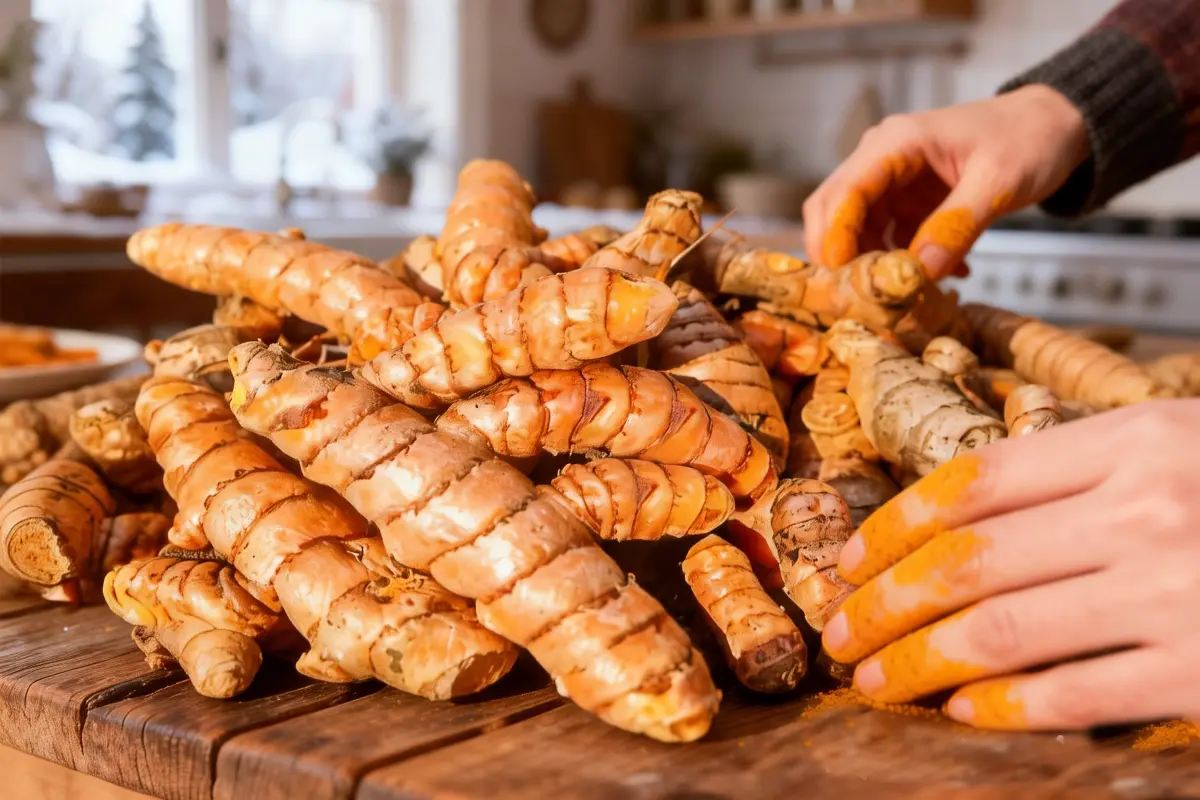
A dish with turmeric, yellow smears, and antics from another winter afternoon
Winter announces itself not with snow here, but with yellow. Stains on cutting boards, faint smudges on apron cuffs, the golden dust on fingertips after market bags are unpacked. This is turmeric season. Not the quiet powder in pantry jars, but raw root, alive and earthy, taking over kitchen counters like a gentle invasion. Its scent rises as I grate it, that petrichor whisper of wet soil and living roots. Turmeric is no longer background spice. It has stepped forward, demanding to be seen, smelled, remembered.
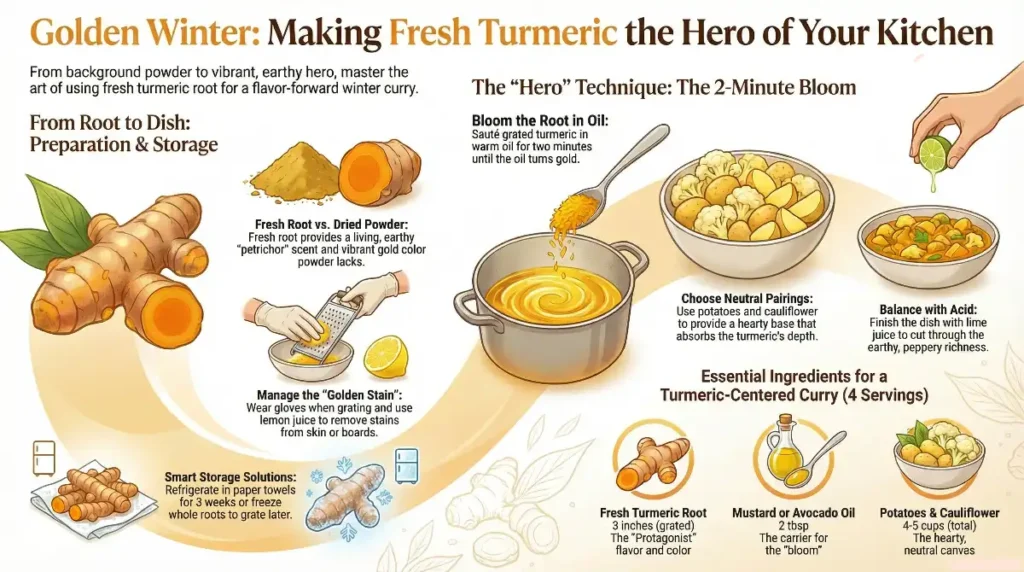
Table of Contents
When Turmeric Takes Over as the Primary Hero
A turmeric-forward curry where fresh turmeric root leads the flavor. You bloom grated turmeric in warm oil first, then simmer potatoes and cauliflower until tender and deeply golden. The result tastes earthy, warm, and quietly bold, perfect for winter.
- Prep Time: 15 minutes
- Cook Time: 25 minutes
- Total Time: 40 minutes
- Yield: 4 servings 1x
- Category: Dinner
- Method: Stovetop
- Cuisine: Indian-inspired
- Diet: Vegetarian
Ingredients
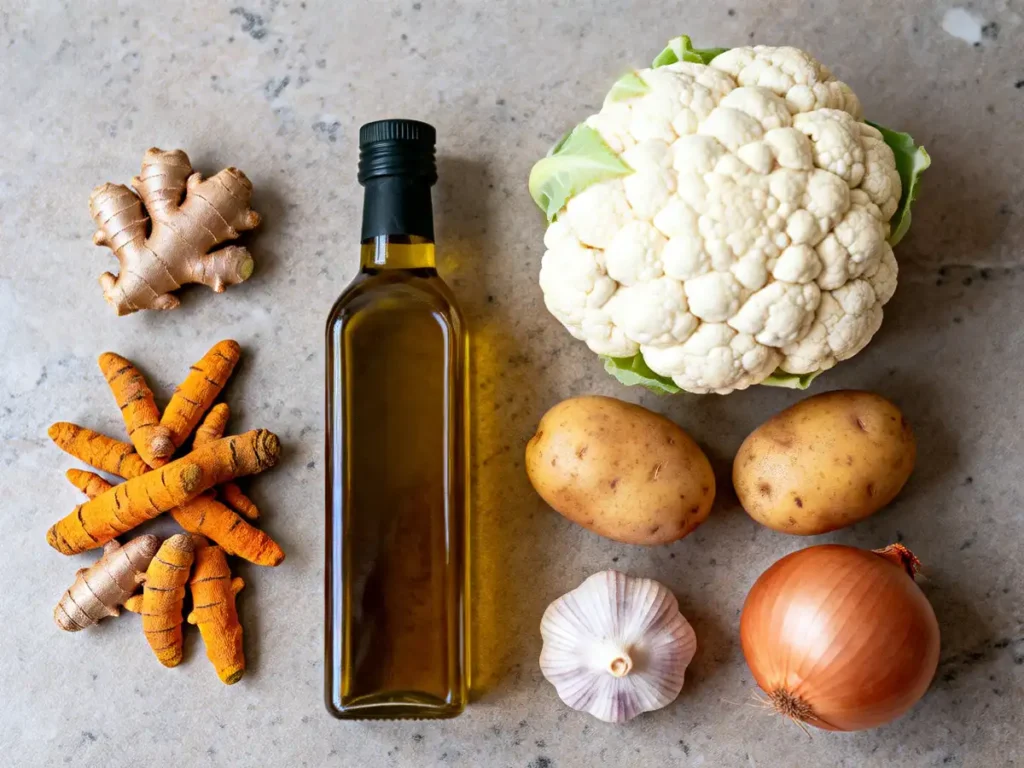
3 inches fresh turmeric root, peeled and finely grated (about 1/4 cup pulp)
2 tbsp mustard oil (or avocado oil)
1 large onion, thinly sliced
3 garlic cloves, minced
1 tsp grated ginger (optional)
1 tsp kosher salt, plus more to taste
1/2 tsp ground black pepper
1/2 tsp cumin seeds (optional)
2 medium potatoes, diced
2 cups cauliflower florets
1 1/2 cups water or vegetable broth
1 tbsp lime juice
Fresh cilantro, chopped (optional)
Instructions
1. Warm the mustard oil in a heavy pot over medium heat until it shimmers, then lower the heat slightly.
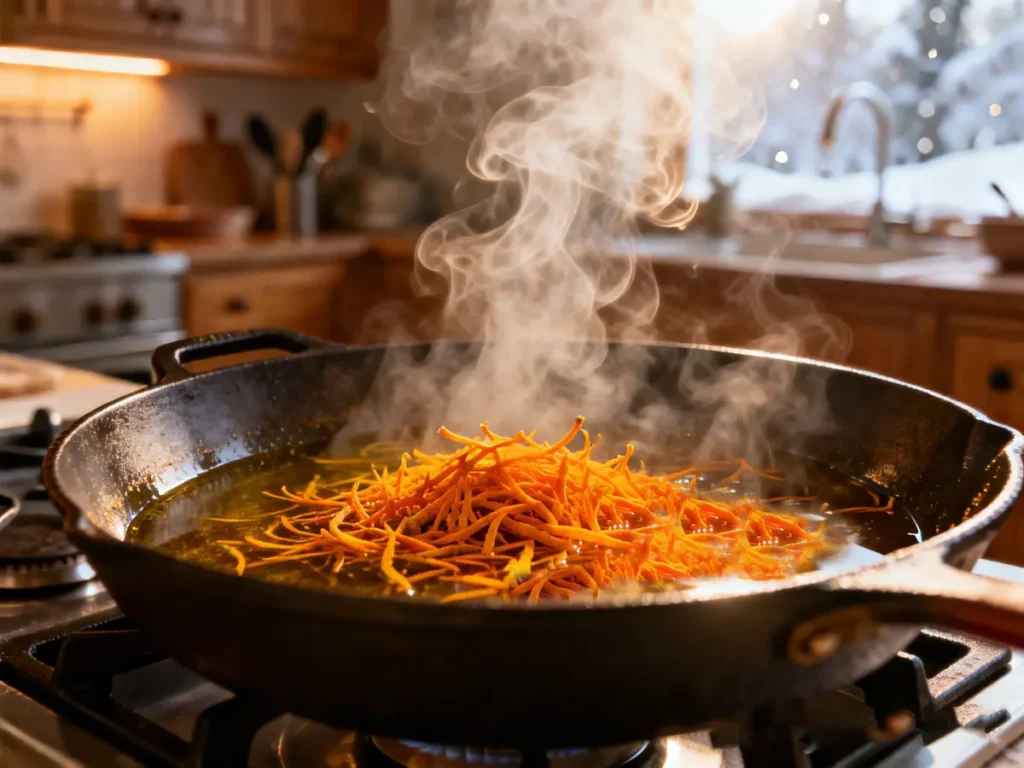
2. Add the grated fresh turmeric and stir for 2 minutes so it blooms in the oil and turns the pot bright gold.
3. Add the sliced onion and cook for 6 to 8 minutes until soft and lightly golden.
4. Stir in garlic (and ginger if using) and cook for 30 seconds.
5. Add salt, black pepper, and cumin seeds if using, then stir well.
6. Add potatoes and cauliflower and toss to coat in the turmeric oil.
7. Pour in water or broth, bring to a gentle simmer, then cover and cook for 15 to 18 minutes until the vegetables are tender.
8. Uncover and simmer 2 to 4 minutes to thicken slightly, then finish with lime juice.
9. Taste and adjust salt, then serve warm with rice or flatbread.
Notes
Wear gloves if you want to avoid turmeric stains on your hands.
Blooming fresh turmeric in oil first is the key step for deep flavor.
Store leftover curry in the fridge for up to 3 days. Reheat gently with a splash of water.
Freeze whole turmeric roots in a bag and grate straight from frozen when needed.
Nutrition
- Serving Size: 1 bowl
- Calories: 260
- Sugar: 6 g
- Sodium: 520 mg
- Fat: 10 g
- Saturated Fat: 2 g
- Unsaturated Fat: 8 g
- Trans Fat: 0 g
- Carbohydrates: 38 g
- Fiber: 6 g
- Protein: 6 g
- Cholesterol: 0 mg
Turmeric and winter markets: a season written in yellow
Raw root arrives with the first sharp chill, piled in wooden crates at market stalls. Vendors wear yellowed nails as badges of honor. I bring home paper bags heavy with knobby roots, their brown skin hiding brilliant orange flesh beneath. Within hours, my kitchen wears the evidence: golden smudges on countertops and faint stains on dish towels. These are not accidents.
They are proof of engagement with a living ingredient, not pantry dust measured by the teaspoon. The root refuses to be ignored. It stains, it scents the air, and it transforms everything it touches. This is winter’s true color here—not white, but gold. For more on how winter produce shapes our kitchens, and for those curious about building a thoughtful spice collection beyond the basics, my guide to pantry essentials begins here.
The smell of turmeric and the memory it carries
Grate fresh root and change the air. That scent—petrichor after rain, wet earth in a sun-warmed garden, something deeply grassy yet profoundly earthy—fills the room in seconds. It is not a loud smell. It does not shout like garlic or chili. It settles, evoking the kind of steam-fogged kitchen where something golden simmers slowly in a heavy pot.
The smell itself can feel like an instruction. This golden spice carries a strong sense of place and time in its volatile oils. Certain aromas can bypass conscious thought and bring back vivid sensory associations almost instantly.
Why fresh root changes how you cook
Dried powder has its purpose. It blends smoothly into batters, colors rice evenly, and sits patiently in the spice rack. But it is a translation, not the original text. Fresh root offers dimensions powder cannot replicate. Texture: firm and fibrous, releasing moisture as it grates. Aroma: that living petrichor scent blooming instantly. Color: a vibrant gold that stains oil within seconds, no stirring required. Many home cooks miss this step because recipes rarely specify “fresh.” They assume powder.
But the root changes the cook’s relationship to the ingredient. You cannot rush greatness. You notice the fibers, the moisture, the intensity. You learn to respect its potency. For cooks building confidence with foundational ingredients, understanding these textures matters deeply. My introduction to simple techniques that transform everyday cooking begins here.
Pickled root, ginger shots, and early experiments
My first steps with this spice beyond curry powder were cautious. Pickled slices in vinegar, sharp and bright, served alongside lentils. Ginger-lemon shots with a whisper of grated root for color. These felt like safe experiments—ways to invite it in without letting it lead. I treated it as an accent, not an actor. The pickling process tamed its earthiness; the shots diluted its presence.
I was curious but hesitant, not yet trusting the root to carry a dish alone. These early attempts were necessary. They built familiarity. But they were preludes. The real shift came later, with a curry that asked turmeric to step fully into the light. No supporting cast. No hiding behind cumin or chili. Just root, oil, and patience.
A turmeric-forward curry that surprised me
The curry began simply: mustard oil heated until shimmering, then cooled slightly. Grated root added not by the teaspoon but by the handful—three inches, yielding a quarter cup of vibrant pulp. As it hit the oil, the kitchen filled with that wet-earth scent. No other spice joined it for two full minutes. Just turmeric blooming in fat, turning the oil the color of sunrise. Then onions, then garlic, then potatoes and cauliflower. The result was not what I expected. Not bitter, not overwhelming. Instead: warm, deeply earthy, with a subtle peppery note balancing the richness.
The turmeric did not dominate. It grounded. It gave the dish a center I had not known was missing. This was turmeric as a protagonist—quietly commanding, impossible to ignore. For those seeking other hearty winter dinners where one ingredient leads with confidence, my approach to Rasta Pasta follows a similar philosophy of bold simplicity.
My grandmother’s quiet kitchen lessons
Traditional cooks often judge turmeric by observation rather than a timer: grate until the oil turns gold, listen for the soft sizzle as the root releases its aromatic compounds, and use the changing scent as a guide. The lesson is simple—turmeric benefits from time, space, and attention rather than rushed cooking.
Sun-drying root and a family ritual reborn
Sun-drying turmeric is a traditional way to preserve the root while concentrating its aroma. The roots are washed thoroughly, sliced thin, and dried until the pieces snap cleanly when bent, then ground in small batches. It is a slower process than using commercial powder, but it highlights the ingredient’s fragrance and character.
The kitchen fills with that earthy scent for days. This ritual reborn is not about rejecting modernity. It is about reclaiming a relationship to food that speed erased.
Why store-bought powder never tells the full story
Commercial powder is consistent: uniform in color, mild in scent, and predictable in behavior. Over time, however, some volatile aromatic compounds can fade during processing and storage. Freshly dried and ground turmeric may therefore taste and smell more vivid than older packaged powder.
This is not a critique of brands. It is an observation about time. Turmeric’s full voice requires freshness. It speaks most clearly when recently dried and recently ground. Store-bought powder is a reliable whisper. Home-dried is a conversation. I do not expect everyone to sun-dry turmeric. But I do hope cooks recognize when an ingredient deserves to be met fresh—in root form, in season, with hands willing to be stained.

FAQ
What is the real difference between fresh turmeric root and powdered turmeric?
Fresh root offers a brighter aroma, subtle peppery notes, and vibrant staining power that powder lacks. Powder is convenient and blends smoothly, but it is a muted version of the root’s full flavor spectrum. For dishes where turmeric should lead, fresh root transforms the outcome. Always bloom it in oil first to unlock its character.
How should I store raw turmeric to keep it fresh?
Wrap unwashed roots in a dry paper towel, place inside a breathable container, and store in the refrigerator crisper drawer. They will keep two to three weeks this way. For longer storage, freeze whole roots in an airtight bag—grate directly from frozen when needed. Never store in sealed plastic alone, as trapped moisture encourages mold.
Why does turmeric stain everything so intensely?
Turmeric contains curcumin, a pigment intensely soluble in oils and stubborn on porous surfaces. This staining is not a flaw—it is proof of potency. To minimize it, grate it over parchment paper directly into pots. To remove stains from skin, rub with lemon juice or baking soda paste. From cutting boards, use coarse salt and lemon halves.
Can turmeric truly be the main ingredient in a savory dish?
Absolutely. When treated with respect—bloomed in oil, balanced with acid like lime, and paired with neutral vegetables like potatoes—it becomes a grounding presence rather than an accent. The key is generosity: use enough root to shift the dish’s center of gravity. Start with three inches of fresh turmeric for four servings and adjust from there.
Conclusion
Winter will fade. The markets will shift from golden roots to tender greens. The yellow stains on my cutting board will gradually disappear, washed away by spring rains and new ingredients. But the memory of this season remains in my hands—the scent of wet earth, the weight of a root in my palm, the quiet certainty that some ingredients are not meant to hide. Turmeric taught me this winter to let certain things lead. Not everything needs to be background. Not everything needs to blend in. Some flavors, like some people, deserve to stand in the light—golden, earthy, unapologetically themselves.
My Secret Tip For a Perfect Turmeric-Centered Dish
Bloom grated fresh root in warm oil for a full two minutes before adding anything else. Do not rush this step. Watch the oil turn gold. Smell the earthy scent bloom. This simple patience unlocks turmeric’s full flavor—transforming it from sharp root to warm foundation. Everything added afterward will carry that depth. This is not a technique. It is an act of attention. And attention is the true secret ingredient.
The golden Here of winter cooking: Pinterest.
Editorial note: Some first-person anecdotes, family references, locations, and recurring kitchen characters in this article are fictionalized or composite storytelling used to introduce the cooking topic. They should not be read as biographical details about Chef Alex.