

In Ethiopia, beef is more than protein. It’s a celebration. It’s trust. And, at times, it’s resistance; it’s Zilzil Tibs.
In the late 19th century, during Menelik II’s campaigns to consolidate the empire, communities took refuge in food as much as arms. Large-scale slaughtering of cattle marked feasts and funerals alike. Men came together to butcher, cook, and eat. From those communal fires, tibs emerged, not as royal cuisine, but as working-class nourishment.
Zilzil tibs, literally “strips of meat,” wasn’t the first form of tibs. But it became a standout. Sliced long instead of cubed, the meat demanded attention. It had to be chewed. It held heat. And it cooked fast, ideal for crowded gatherings, fast-moving cooks, or a tavern’s hotplate.
This dish today carries its own rhythm. Fast pan, sharp knife, seasoned fat. Long beef strips coated in berbere, tossed in niter kibbeh, eaten with injera. It’s loud and direct. And like Ethiopia’s history, it doesn’t soften its edges to please you.
Like we explored in What Are Famous Beef Dishes?, Ethiopia has its own take on beef that’s bold, structured, and regionally specific.
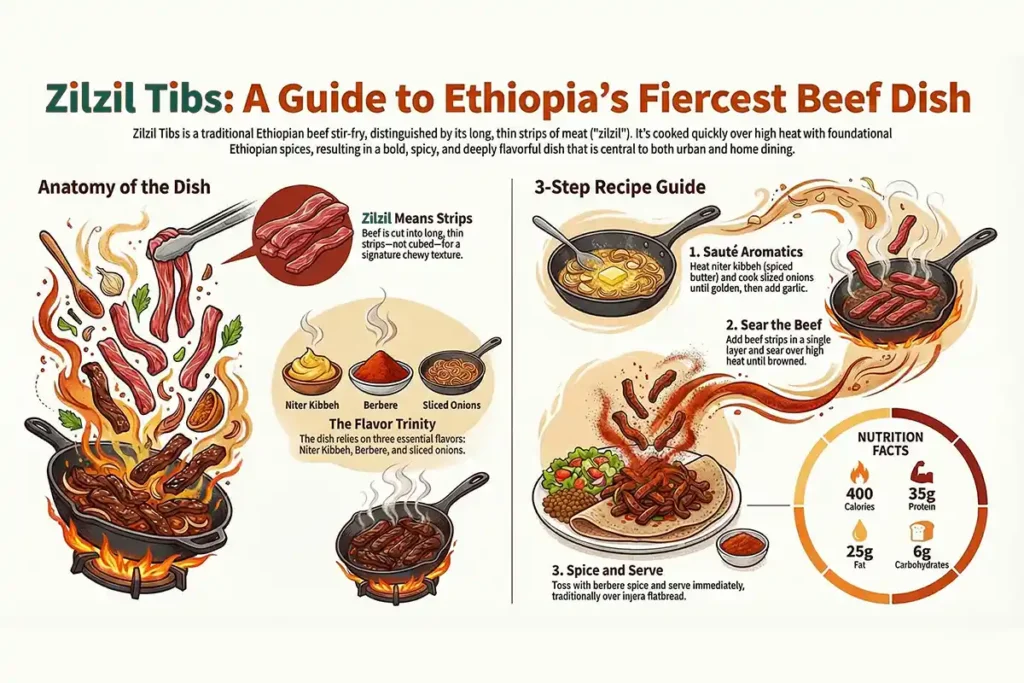
Table of Contents
Zilzil Tibs: Ethiopia’s Fiercest Beef Dish, Explained

Zilzil Tibs is a traditional Ethiopian beef stir-fry made with long strips of beef, cooked quickly in niter kibbeh and seasoned with berbere spice.
- Prep Time: 15 minutes
- Cook Time: 10 minutes
- Total Time: 25 minutes
- Yield: 2 servings 1x
- Category: Main
- Method: Sauté
- Cuisine: Ethiopian
- Diet: Gluten Free
Ingredients
1 lb flank or skirt steak, sliced into long strips
2 tbsp niter kibbeh (spiced clarified butter)
1 red onion, thinly sliced
3 cloves garlic, sliced
1–2 tsp berbere spice
1 green chili, sliced (optional)
Salt to taste
Instructions
1. Heat the niter kibbeh in a cast iron pan until shimmering.
2. Add onions and sauté until golden.
3. Add garlic and stir briefly.
4. Increase heat and add beef strips in a single layer.
5. Sear without stirring too much, then add berbere spice.
6. Toss with green chili or tomato slices (optional).
7. Serve hot over injera or rice.
Notes
Slice beef against the grain for tenderness.
The dry version is the most traditional, but you can add tomato or stock for a wetter finish.
Nutrition
- Serving Size: 1 plate
- Calories: 400
- Sugar: 3g
- Sodium: 400mg
- Fat: 25g
- Saturated Fat: 10g
- Unsaturated Fat: 12g
- Trans Fat: 0g
- Carbohydrates: 6g
- Fiber: 2g
- Protein: 35g
- Cholesterol: 90mg
Tibs Is a Format, Not a Recipe
In Ethiopian cooking, tibs is a method. Not a single dish. The word refers to sautéed meat, usually beef or lamb, cut and cooked quickly over high heat with onion, garlic, and spice.
Zilzil tibs breaks from the standard by using long, thin strips of beef, often six inches in length. Unlike cubed tibs, these strips char on the edges while staying chewy in the center. Texture is key. So is timing.
While traditional tibs might simmer in stews or be wrapped in vegetables, zilzil tibs is leaner and more direct. No slow cooking. No sauce bath. It’s about heat, fat, and seasoning fast.
Where Zilzil Tibs Found Its Place
Zilzil tibs grew in urban centers. Particularly in Addis Ababa, where post-war cafes and taverns served it as a bridge between home and modern dining.
Unlike raw kitfo or slow doro wat, zilzil tibs didn’t require ceremony. It could be served with beer. It traveled well across the diaspora. And it matched the pace of the working class: fast-cooked, deeply flavored, and low-prep.
In the United States, you’ll find it in Ethiopian-owned restaurants from D.C. to Oakland. It’s often one of the few beef dishes listed separately. The name itself, zilzil, helps it stand out to Western diners unfamiliar with Amharic. It’s a dish you can describe by gesture: both hands held out, mimicking a strip.
Choosing the Right Beef for the Job
The beef in zilzil tibs needs structure. It can’t be too tender, or it loses texture. It can’t be tough, or it fails the fast sear.
Ideal cuts:
- Flank steak: Balanced fat, clean grain
- Skirt steak: High flavor, benefits from quick cook
- Sirloin tip: Lean but still textured
Each cut should be sliced against the grain into strips roughly ½ inch wide and 5–6 inches long. This keeps chew manageable without losing the “zilzil” feel.
Trim visible fat, but don’t overdo it. A little marbling supports the high-heat sear.
If you’re unfamiliar with cut types, our Ultimate Guide to Beef Steak Names and Cuts can help you choose the right one for zilzil tibs.
Foundational Flavors: Three Must-Haves
Every Ethiopian cook will tell you: it’s not the meat. It’s the base.
1. Niter Kibbeh
Ghee works in a pinch. But the flavor will be flatter.
2. Berbere
No substitute. Berbere is a spice blend with dried chili, paprika, ginger, and cloves. Some families add cinnamon. Others skip garlic powder in favor of fresh.
If you don’t make your own, look for brands like Brundo or Ethiopian Spices. They stay truer to the traditional ratios than generic blends.
3. Onion and Garlic
Not minced. Not pureed. They’re sliced and fried until golden. Their slight bitterness balances the chili heat and beef fat.
Cooking Zilzil Tibs: Fast, Hot, Unforgiving
This dish works best in cast iron or carbon steel. You want a surface that holds heat and browns well. Nonstick pans won’t develop the same crust.
Cooking Steps:
- Heat 2 tablespoons of niter kibbeh until shimmering.
- Add one large red onion, sliced thin. Cook until golden.
- Add 3 cloves of garlic, sliced, and stir for 30 seconds.
- Increase heat. Add beef strips in a single layer. Sear in batches.
- Add 1–2 teaspoons of berbere while stirring.
- Finish with sliced green chili or tomato, optional.
Cook time: Under 10 minutes total.
The goal is a dry sear, not a sauce. The final texture should be glossy but not wet.
For readers used to milder dishes like chicken pot pie, zilzil tibs might be a new but welcome contrast of spice and sear.

Presentation: Hot Plate, Shared Spoon
In Ethiopia, zilzil tibs is often brought to the table in the same pan it was cooked in. Still sizzling. Usually served over injera, which soaks up the drippings.
The dish is meant to be eaten by hand. You tear pieces of injera and scoop the beef. No forks. No knives.
At home, if you don’t have injera, serve with:
- Basmati rice
- Flatbread
- Plain couscous
Similar to how a brisket sandwich benefits from acidic sides, zilzil tibs is rounded out by fresh, crisp vegetables.
Side Dishes That Belong
Zilzil tibs is strong. You need balance. Traditional sides include:
- Miser wot: Spicy red lentils
- Gomen: Braised collard greens
- Ayib: Mild homemade cheese
- Azifa: Lentil salad with mustard and lemon
Each one adds contrast, whether it’s cool, sour, or creamy.
Regional Styles and Restaurant Tweaks
No two zilzil tibs are alike. In Bahir Dar, cooks marinate the meat in lemon and garlic for hours. In Addis, some use green peppers and awaze (berbere mixed with tej or oil) for a sticky finish.
In the US, many restaurants lean toward a wetter version, almost like a stir-fry. This isn’t wrong. It’s a nod to diner preference. But if you want the sharper flavor and firmer texture, order it dry.
You’ll often be asked how spicy you want it. Say “medium” if you want the berbere to show up without taking over. Say “hot” only if you’ve eaten Ethiopian food before.

How to Make Zilzil Tibs at Home (In Brief)
Ingredients:
- 1 lb flank or skirt steak, sliced long and thin
- 2 tbsp niter kibbeh
- 1 red onion, thinly sliced
- 3 cloves garlic, sliced
- 1–2 tsp berbere
- Salt to taste
- Optional: green chili or tomato slices
Steps:
- Heat fat, cook onion.
- Add garlic, then beef in batches.
- Add spice, and finish with extras.
- Serve on warm injera.
Cook time: Under 15 minutes
Total prep: Under 30 minutes
Frequently Asked Questions
What is Zil Zil Tibs?
Zilzil tibs is an Ethiopian beef dish made with long, thin strips of meat quickly sautéed in spiced butter with onions and berbere. The name refers to the ribbon-like cut of the beef, which helps it cook fast and hold spice evenly. It’s usually served on injera and eaten by hand.
What does tibs mean in Ethiopian?
In Amharic, “tibs” refers to pan-fried meat, often beef or lamb. It’s a cooking method more than a single dish. Variations include dry, saucy, or spiced versions, and it can be served in casual or festive meals.
What exactly is Awaze Tibs?
Awaze tibs is a style of tibs prepared with awaze, a chili-based paste made from berbere, mustard, garlic, and sometimes honey or wine. The paste gives the beef a deeper spice and slight tang, making it more intense than regular tibs.
What is Ethiopia’s most famous dish?
Ethiopia’s most recognized dish is doro wot, a spicy chicken stew served with hard-boiled eggs and injera. It’s often prepared for holidays and special occasions, and it showcases key elements of Ethiopian cooking: berbere spice, slow simmering, and injera as the base.
Why Zilzil Tibs Endures
This dish doesn’t cater. It doesn’t hide its flavor or simplify its shape. It’s sharp, hot, chewy, and bold. Zilzil Tibs respects the beef. It doesn’t stew it into softness. It doesn’t mask it with gravy.
It remains popular because it’s fast, full of character, and built for sharing.
If you want to understand Ethiopian food beyond stews and sponges, start here. Knife. Pan. Spice. Beef.
That’s zilzil tibs.
For a detailed look at how Zilzil Tibs moved from these ceremonial roots into daily life, see this article:
Zilzil Tibs: How One Dish Traveled from Celebration to Weeknight Staple.