
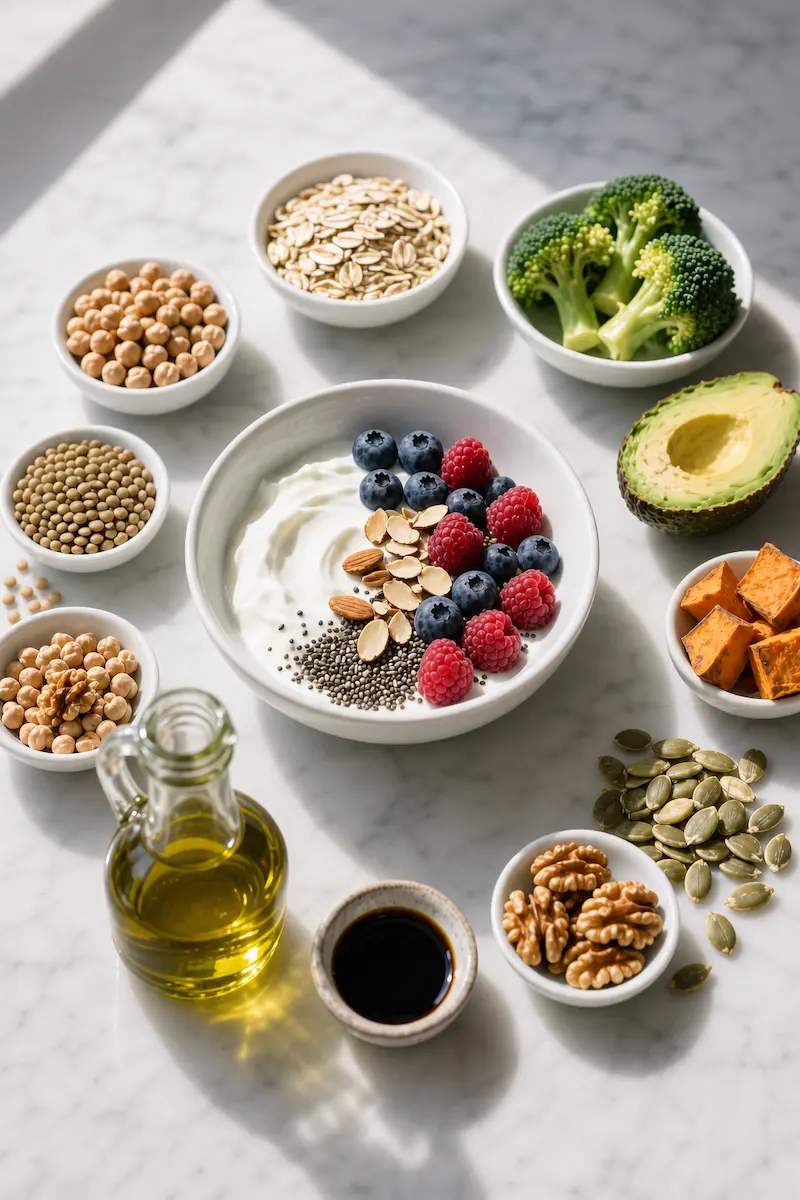
Eric Topol’s fiber habit is not a supplement protocol or a complicated rulebook. It is a repeatable, whole-food eating pattern built around vegetables, legumes, nuts, seeds, whole grains, and other minimally processed foods, assembled consistently across the day and sustained over years rather than weeks. That consistency, more than any single food or number, is what makes the habit worth understanding.
This article breaks down what that pattern actually looks like, why whole foods matter more than fiber supplements, and how to apply the core habits in a realistic kitchen without overhauling your entire life.
Table of Contents
What Eric Topol Actually Says
Dr. Eric Topol is a cardiologist, genomics researcher, and the founder and director of the Scripps Research Translational Institute. Through his public writing on Eric Topol’s Substack on diet and healthy aging, he has consistently pointed toward a Mediterranean-style, plant-forward dietary pattern as the most evidence-supported approach to longevity and healthy aging currently available.
His nutritional guidance is specific in a few important ways. First, it is food-first: Topol does not advocate for fiber powders or supplements as a primary strategy. The fiber he references comes from whole foods with all their accompanying polyphenols, vitamins, and natural food structure intact. Second, it is built around a daily target of 25 to 30 grams of fiber daily from diverse plant sources, a target that most people eating a standard Western diet fall significantly short of. Third, and perhaps most categorically, it centers on the elimination of ultra-processed foods as the single highest-leverage dietary decision most people can make.
What Topol does not do is prescribe a rigid meal plan or a numbered protocol. His public writing describes a pattern of eating, not a diet in the commercial sense. That distinction matters for how to apply it.
The Daily Pattern
A Topol-style eating day has a recognizable rhythm even without a fixed menu. The fiber comes from whole plant sources at every meal, not from a single high-fiber moment. The eating window is reasonable and consistent, broadly aligned with a 10 to 12 hour period that respects circadian biology. And the overall food environment contains no ultra-processed foods because those foods have been removed from the pantry rather than resisted through willpower at every meal.
Breakfast is fiber-rich and built from whole ingredients: oats, berries, seeds, and nuts in some combination, often with a dairy or plant-based protein alongside. Lunch is the largest and most diverse meal in terms of plant variety, typically centered on leafy greens, legumes, and raw or lightly cooked vegetables with a quality protein source. Dinner is lighter and early, usually featuring oily fish with roasted vegetables, designed to close the eating window before the evening is significantly advanced.
The point of describing the rhythm rather than the specific foods is that the pattern is the habit. Any meal that fits the template contributes to it. The consistency of fitting the template across most days, across most weeks, is what the evidence on longevity actually reflects.
For a complete day-by-day breakdown of how these meals work in practice, see What Eric Topol Eats in a Day.
For a structured 21-day plan that applies the same whole-food principles progressively, see Best 21 Day Cleanse Program for 2026: Simple, Clean Meals.
Why Whole Foods Matter More Than Supplements
The case for whole-food fiber over supplemental fiber is not just about fiber. It is about everything that comes with the fiber.
A cup of cooked lentils delivers approximately 16 grams of dietary fiber. It also delivers folate, iron, magnesium, potassium, plant protein, and a complex of polyphenolic compounds that support the gut microbiome in ways that isolated fiber supplements do not. A psyllium husk capsule delivers soluble fiber. It delivers nothing else. For people with specific clinical needs, supplemental fiber has a documented place. As a primary strategy for longevity-oriented nutrition, it misses the point of what high-fiber foods actually do when consumed in their whole form.
The gut microbiome responds to diversity of fiber sources, not just to fiber quantity. Research consistently shows that eating 30 or more distinct plant varieties per week produces significantly greater microbiome diversity than eating a handful of the same high-fiber foods repeatedly. A fiber supplement contributes one type of isolated fiber. A varied whole-food diet contributes dozens of fermentable substrate types across different fermentation rates, feeding different bacterial populations in the colon and producing a broader spectrum of short-chain fatty acids.
This is also why ultra-processed foods undermine the fiber habit even when their labels claim high fiber content. Foods engineered with isolated chicory root, inulin, or soluble corn fiber as labeled fiber sources deliver those compounds in a food matrix that simultaneously contains emulsifiers, artificial flavors, and preservative systems that disrupt the gut microbiome. The fiber label is accurate. The food is still not aligned with the whole-food pattern.
One Anchor Recipe: High-Fiber Greek Yogurt Bowl with Berries, Seeds and Nuts
This bowl is not Eric Topol’s official recipe. It is a practical illustration of how the fiber habit pattern translates into a real breakfast that takes four minutes to assemble and delivers approximately 10 to 14 grams of dietary fiber from six distinct whole food plant sources.
Ingredients (serves 1)
- Three quarters of a cup of plain whole-milk Greek yogurt (or unsweetened plant-based yogurt for a vegan version)
- Half a cup of mixed fresh or frozen berries (blueberries, raspberries and blackberries)
- 1 tablespoon of chia seeds
- 1 tablespoon of ground flaxseed
- 2 tablespoons of chopped walnuts or almonds
- 2 to 3 tablespoons of low-sugar granola (look for a version with five or fewer whole-food ingredients and less than 6g of sugar per serving)
- Optional: a small drizzle of raw honey or a few drops of liquid stevia
Directions
Spoon the Greek yogurt into a bowl and spread it to the edges to create a stable base. Add the mixed berries on top. Scatter the chia seeds and ground flaxseed evenly over the surface. Add the chopped nuts. Finish with the granola, distributing it across the top for even crunch. Add the optional sweetener if desired.
Why It Fits the Pattern
This bowl works as a longevity-aligned breakfast for several reasons beyond the fiber count. The yogurt provides high-quality dairy protein and a live culture contribution to the gut microbiome. The berries provide anthocyanin antioxidants and polyphenols with documented anti-inflammatory properties. The chia seeds and ground flaxseed provide alpha-linolenic acid (ALA omega-3 fatty acids) alongside their soluble fiber. The walnuts add additional ALA and a small but meaningful mineral contribution. The low-sugar granola adds texture without the ultra-processed ingredient list of most commercial versions.
Every ingredient is substitutable based on budget and preference: frozen berries for fresh, hemp seeds for chia, pecans for walnuts, and oats toasted in a dry pan as a granola replacement. The pattern remains valid through any of those substitutions.
For more ideas on building high-fiber mornings with whole-food ingredients, see Top 5 Green Detox Smoothie Benefits for Clean Morning Energy and Simple Smoothies To Burn Belly Fat: 5 Game-Changing Recipes.
PrintEric Topol Fiber Habit

A practical whole-food high-fiber breakfast inspired by Eric Topol’s fiber habit.
- Prep Time: 5 minutes
- Cook Time: 0 minutes
- Total Time: 5 minutes
- Yield: 1 serving 1x
- Category: Breakfast
- Method: No-Cook
- Cuisine: Mediterranean
Ingredients
- 3/4 cup plain Greek yogurt
- 1/2 cup mixed berries
- 1 tablespoon chia seeds
- 1 tablespoon ground flaxseed
- 2 tablespoons chopped walnuts or almonds
- 2 tablespoons low-sugar granola
Instructions
- Spoon the Greek yogurt into a bowl.
- Add the mixed berries on top.
- Sprinkle chia seeds and ground flaxseed evenly.
- Add chopped nuts and granola.
- Serve immediately.
Notes
Use whole-food ingredients and avoid ultra-processed toppings.
Nutrition
- Serving Size: 1 bowl
- Calories: 320
- Sugar: 12g
- Sodium: 90mg
- Fat: 18g
- Saturated Fat: 5g
- Unsaturated Fat: 11g
- Trans Fat: 0g
- Carbohydrates: 24g
- Fiber: 12g
- Protein: 18g
- Cholesterol: 20mg
How to Apply the Habit
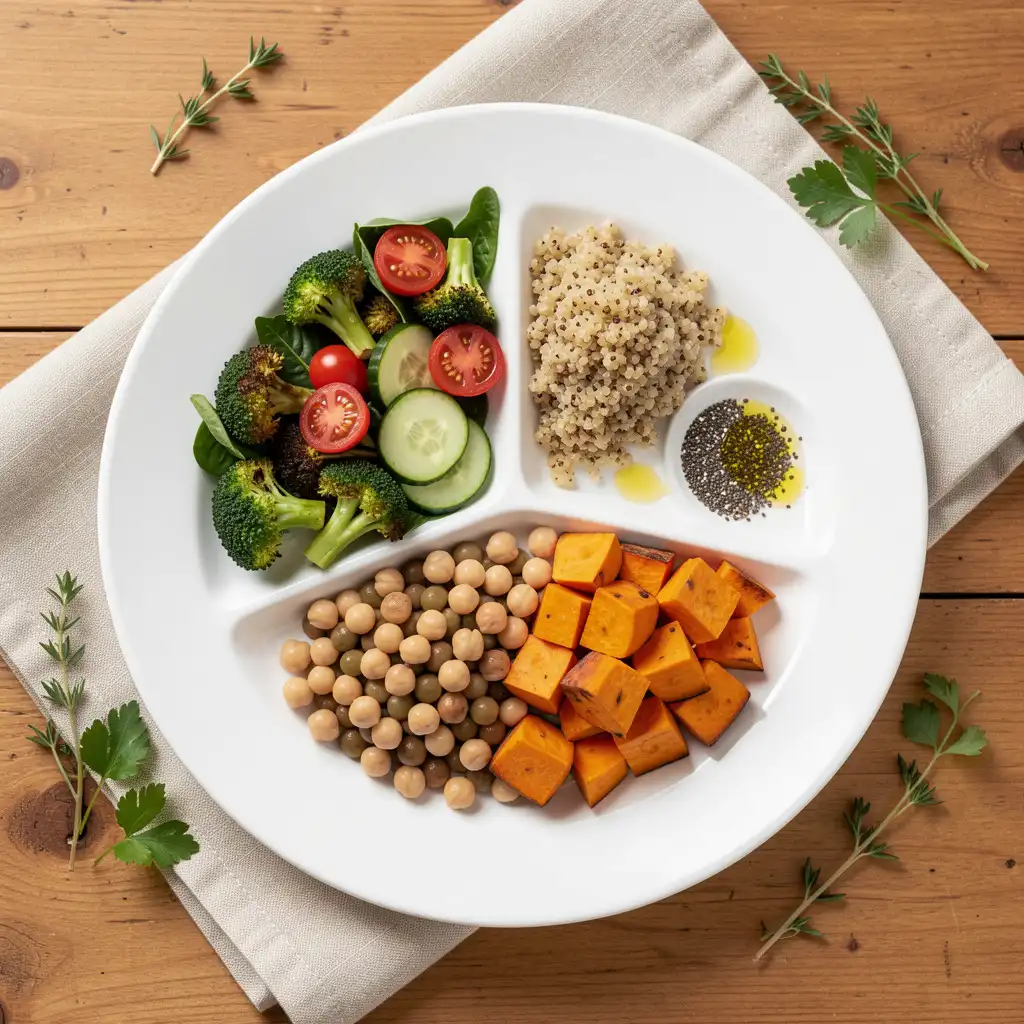
The most common mistake in implementing Eric Topol’s fiber habits is trying to change everything at once. The gap between a standard Western diet delivering 13 to 17 grams of fiber daily and a longevity-aligned diet delivering 30 grams is significant, but it does not need to be closed in a week.
Step 1: Track your current fiber intake for three days. Use a free food tracking app to enter everything you eat over three consecutive days, including weekends. Most people are genuinely surprised by how low their actual fiber intake is relative to what they assumed. The number is the baseline, not a judgment.
Step 2: Replace one processed snack or meal with a whole-food fiber option. Not all three meals. One. The yogurt bowl above is one option. A handful of mixed raw nuts and an apple is another. A bowl of oatmeal with chia seeds and berries instead of a breakfast cereal is another. The specifics matter less than the consistency of the replacement.
Step 3: Add seeds or legumes to the largest meal of the day. The lunch or dinner meal that is already planned gets one fiber addition: a tablespoon of ground flaxseed stirred into a sauce, a half cup of chickpeas added to a salad, or a cup of lentil soup alongside whatever was already on the menu. This single habit, applied consistently to the largest meal, can add 8 to 12 grams of fiber to the daily total without changing anything else.
The body requires time to adapt to a significant fiber increase. The gut microbiome shifts its composition in response to new fiber substrates, which takes 2 to 4 weeks of consistent change. During that adaptation period, bloating and digestive adjustment are normal and expected. Drinking an additional 500ml of water daily above your usual intake during the ramp-up period significantly reduces the discomfort.
For a structured three-week framework that builds these changes progressively, see Best 21 Day Cleanse Program for 2026: Simple, Clean Meals.
For liquid-based options that contribute to morning fiber and detox habits, see Top 5 Green Detox Smoothie Benefits for Clean Morning Energy.
Common Mistakes
Increasing fiber too quickly. Going from 15 grams to 40 grams in a week produces significant digestive discomfort that most people interpret as their body rejecting the change rather than adapting to it. Increase by 5 grams per week, not per day.
Not drinking enough water. Fiber absorbs water in the intestinal tract. Without adequate hydration (at minimum 1.5 to 2 liters of water daily, more when significantly increasing fiber), the fiber contributes to constipation rather than preventing it. This is the single most commonly overlooked aspect of implementing a high-fiber dietary change.
Relying only on supplements. Psyllium husk, inulin capsules, and fiber powders have their place in specific clinical contexts. They do not replicate the microbiome diversity benefits, polyphenol contributions, or satiety effects of whole food fiber. Using supplements while maintaining a low whole-food fiber diet misses the fundamental point of Eric Topol’s fiber habit.
Expecting instant results. The benefits of a high-fiber, whole-food dietary pattern accumulate over months and years, not days. Short-term changes in digestion and satiety are often noticeable within two to three weeks. The cardiovascular, cognitive, and longevity-associated benefits that Topol’s public writing references emerge from years of consistent adherence.
Choosing ultra-processed foods marketed as high-fiber. A protein bar with 10 grams of isolated chicory root fiber and 20 ingredients including emulsifiers and artificial flavors is not a substitute for a serving of lentils. Read ingredient lists, not just nutrition panels.

FAQs: Eric Topol’s fiber habit
What Kind of Fiber Does Eric Topol Recommend?
Topol’s public guidance emphasizes fiber from diverse whole food sources rather than any specific type of supplemental fiber. This includes soluble fiber from oats, legumes, chia seeds, and psyllium; insoluble fiber from vegetables, whole grains, and nuts; and the full spectrum of fermentable fibers that come with eating a wide variety of plant foods. The diversity of sources is as important as the total quantity.
Does Eric Topol Take Fiber Supplements?
Topol’s public writing focuses on whole-food sources rather than supplemental fiber as a primary strategy. He has not publicly advocated for a specific fiber supplement product. His guidance consistently returns to food as the primary vehicle, with supplements occupying a secondary role for people who cannot achieve adequate intake through diet alone.
How Much Fiber Does Eric Topol Eat Daily?
Based on his public writing and the dietary pattern he describes, the target he references is consistent with the broadly recommended 25 to 30 grams of daily dietary fiber from whole food sources, a target most people consuming a standard Western diet fall significantly short of.
Is Eric Topol’s Diet Vegan or Mediterranean?
Neither exclusively. Topol’s publicly described dietary pattern is plant-forward but not strictly vegan. It includes fish (particularly oily fish for omega-3 fatty acids), eggs and some dairy, while largely excluding red meat and entirely excluding ultra-processed foods. The closest dietary framework it resembles is the Mediterranean dietary pattern, which has the strongest epidemiological evidence base for cardiovascular and cognitive longevity among all studied dietary patterns.
What Does Eric Topol Eat for Breakfast?
Topol has not publicly specified his exact breakfast. Based on the nutritional principles he advocates, a breakfast consistent with his guidance would be built around whole grains (oats), berries, seeds, and nuts with no ultra-processed ingredients. The Greek yogurt bowl in this article is one practical example that aligns with those principles. The What Eric Topol Eats in a Day guide covers a complete day of meals built from his publicly stated framework.
The Bottom Line
Eric Topol’s fiber habit is, at its core, a whole-food eating pattern built for longevity rather than a complicated supplementation protocol. The habit is defined by what it includes (vegetables, legumes, whole grains, nuts, seeds, fruit, and oily fish) and what it excludes (ultra-processed foods with more than five ingredients and industrial additives). The daily fiber target of 25 to 30 grams is a useful benchmark, but it is a consequence of eating the right foods consistently, not a number to be achieved through powders and capsules.
The research Topol synthesizes consistently returns to the same conclusion: long-term dietary pattern adherence matters more than short-term dietary precision. A whole-food diet that delivers 28 grams of fiber per day from diverse plant sources, sustained over five years, produces health outcomes that no 30-day fiber supplement protocol can approximate.
Pick one whole-food swap this week. Replace one processed snack with a handful of nuts and a piece of fruit, or add a tablespoon of ground flaxseed to tomorrow’s breakfast. Track how you feel over the following three days. Then repeat it.
That is the habit. The complexity comes later, if you want it. The results come from the repetition.